
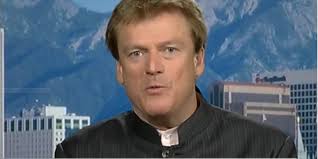




This is the first anniversary of the destruction of Bear Stearns.
For a while there, just after it happened, everybody was talking about the role of short selling, both legal and illegal, in Bear’s rather violent passing.
Since then, the big question has gone from “who the hell set this fire?” to “how did this place devolve into such a firetrap, anyway?” and “how the hell do we get out of this burning building?”
Finding answers to all three questions is vitally important. Yet, I’m a little bothered by the fact that these days, so little attention is being focused on the first.
And so, exactly one year after criminal arsonists set a match to the over-leveraged heap of oily rags that was Bear Stearns, I offer up this video examination of that event, and those that would follow.
While I hope you will all enjoy and help circulate it, I should point out that this video was not primarily made for the frequent readers of DeepCapture.com (as everything in it has already been examined in these pages). Instead, it’s for those who’ve yet to understand why they should be outraged at what’s going on.
In other words, it’s primarily for future readers of DeepCapture.com.
Yet, I need you regulars to take a look, and then help get this out there. Plus, the music is pretty cool, so it’ll be worth your time to watch anyway.

This is exactly the type of media we need to spread the message to a wider audience. Good job on this video Judd!
Judd,
WOW!
With this video, you not only hit a home run out the park… I think the ball will circle the earth!
Everyone should send this link to their friends and their representatives:
http://vimeo.com/3722293
Here is a generic letter I wrote to Congress for anyone to use as is or modify, or not, in reference to Judd’s most outstanding video:
Dear Honorable xxxxx,
Some months ago, I sent you an email about NAKED SHORT SELLING and did not receive a response.
Today I viewed a new video that clearly and precisely explains HOW Naked Short Selling sparked the collapse of the world economies:
http://vimeo.com/3722293
After viewing this clear explanation of the role NAKED SHORT SELLING played in putting us American Citizens in our present bad economic situation, it is now Ultra CLEAR that Congress can no longer sit on their hands, look the other way and pretend there is nothing wrong on Wall Street.
The SEC completely failed us American Citizens by allowing the “Financial Terrorists on Wall Street – the Wall Street Counterfeiters” to use Naked Short Selling (counterfeiting) to destroy Bear Stearns and then Lehman Brothers. For many years, the SEC has placed mere “band-aids” on the known illegal activities of the NAKED SHORT SELLING Hedge Funds who used the “Madoff Exemption” of Market Makers to “legally” engage in “Counterfeiting” to feed their greed which has resulted in the destruction of our children’s college funds and retirement funds, and the destruction of thousands of other smaller companies.
After you view this video by Judd Bagley entitled “Hedge Funds and the Global Economic Meltdown” (http://vimeo.com/3722293), I think you will agree that every American Citizen is going to feel angry, and upset with you Congress and the SEC after viewing this video themselves.
I can tell you that I am angry and upset that even AFTER the world economies were brought to their knees, you Congress and the SEC have done nothing to completely stop the “Financial Terrorists on Wall Street – the Wall Street Counterfeiters.” For example, no one in Washington DC has yet demanded that “Financial Terrorist” in the Shorting Hedge Fund Industry – DELIVER Every Single Share They COUNTERFEITED and Have Refused To Deliver – over the last many, many years!!!!
Now I read that the Short Selling Hedge Funds, who are the “Financial Terrorists on Wall Street,” and who lit the spark that caused the global economic meltdown want to help craft the new laws Congress will pass to fix our broken regulatory system. This is INSANE!!!! These “Financial Terrorists on Wall Street” need to be prosecuted, convicted, put in prison, and their wealth confiscated, and in NO WAY invited to HELP write the new regulatory rules.
WHY?
It was reported in the news that Madoff, the now famous Wall Street Criminal, spent about 30% of his time HELPING the SEC and others create the “best” regulatory rules for the financial industry. This “HELP” by Madoff produced among other things the “Madoff Exemption” which became a favorite tool for the “Wall Street Terrorists” to counterfeit shares of publicly traded stocks which led to the destruction of Bear Stearns, Lehman Brothers and our Global Economies. So you see, it is INSANE to ask Wall Street Terrorist Members to HELP write the new financial rules governing themselves. You should NOT ask the Wall Street Criminals to write the new laws to govern THEIR criminal activity.
I have also read that the “Wall Street Terrorist” were NOT content to counterfeit just stock shares, but instead branched out to counterfeiting “U. S. Treasury Bonds” to the tune of 2 Trillion Dollars, among other financial instruments. And no one has be arrested yet for counterfeiting 2 Trillion Dollars of “U. S. Treasury Bonds”? And no one has been arrested for counterfeiting Bear Stearns and Lehman Brothers stock shares? Do you see the same pattern I see here?
I hope you see that immediate action is needed, and I look forward to seeing you actively engaged in shutting down the “Wall Street Counterfeit Machine, the Financial Terrorist” who have terrorized all American Citizens and the Citizens of the World by destroying our savings, our jobs, and our world economies.
Sincerely,
Here is a new report about Naked Shorting in the WSJ:
Naked Short Sales Provoke Complaints but No Cases
* Article
* Comments (2)
more in Law »
WASHINGTON — The Securities and Exchange Commission received 5,000 complaints over a year and a half about an aggressive form of short selling that critics call market manipulation, but it didn’t bring any enforcement cases, according to a report by the agency’s inspector general.
The findings will likely stoke the debate about short selling, which has been blamed for driving down shares of financial stocks, …
( http://online.wsj.com/article/SB123742141942278703.html#printMode )
Judd:
Excellent article and video presentation of the entire naked short selling problem and the resultant collapse of the global economic system. It validates much of the information that I have exchanged via e-mail with Mark Mitchell dating from August & September of 2008 when I inquired is “Chairman Cox of the SEC aiding and abetting short sellers with his Distort (implementation of arcane mark-to-market rule for financials-FAS 157) and unrestrained Short selling (removal of uptick rule) ?” This program, as your video shows, along with naked short selling, helped crush BSC and LEH along with a number of other financial institutions. Kudos for your research work in preparing this video.
I have taken the liberty of sending the link to this video on to my Senator, a prominent member of the Senate finance committee studying the near collapse of the banking system, and my congressman. Thanks again for the excellent work you and Mark are doing for Deep Capture. Keep it up.
WFB
Bloomberg article on Naked Short Selling by Gary Matsumoto. It is getting a homepage treatment.
Go Gary Go!!!
http://www.bloomberg.com/apps/news?pid=20601109&sid=aB1jlqmFOTCA
It appears all the ‘manipulative’ hedgie shorts declined to comment for the article. However, they were very vocal in public and the media on their short positions of Bear and Lehman before their demise. Is it possible Einhorn and pals lost their voice from those ‘hard’ questioning of Bear/Leh’s financial health and screaming lungs out about their shorts in the media from last year?
Here is a letter I sent to my reps..
You are welcome to use or edit it, to send your rep a heads-up.
This crisis appears to have been orchestrated and used for consolidation in the financials. We were held hostage by the “too big to fail” mentality and we are ending up with even larger entities. This needs to be addressed.
There was no oversight into the mortgage originators when they failed and were acquired by the banks, nobody questioned the deals or what the future implications were of the large banks controlling so much of the mortgage market. Had these originators been allowed to fail and their assets auctioned off, the contagion would not have gone through out the system and the losses would have stopped there. Instead, the banks did the aquisitions, hedged with CDS and a problem that could have ended at Countrywide, ended up on the taxpayer at AIG. Instead of the losses being confined to the losses on some MBS, we are stuck with providing insurance on multiples of that with CDS.
WE have to stop letting companies get too big to fail. They can play us forever and hold us hostage, particularly when the Treasury, etc is run by the very bankers who get rewarded for doing the acquisions.
When reworking regulations, we should put some sort of penalty in place for the risk of being too large. These banks can pay a higher FDIC fee or have a higher tax rate than the smaller banks who are less likely to bring down the entire system. These big banks don’t create jobs, they lay people off in take-overs. The money that could be used for expanding the economy ends up in the Hamptons.
It is apparent that the President and Congress want to know who is really getting the bailout money.. and it is the ones who were behind the crisis and are most likely going to have the money to do further acquisions.
The OIG report from the SEC is an eye-opener. The SEC has done nothing to find out who was behind the manipulation of the market. There is a short video that explains how BSC was brought down and it would be easy for authorized investigators to get those behind it. The public doesn’t have the trade tickets.. the SEC can get them. The FBI can get them. Today is the anniversary of the BSC demise. Nothing has been done.
https://www.deepcapture.com/the-short-heard-round-the-world/
OMG…you mean Banks LIED TO GET BAILOUT MONEY?
13 firms receiving federal bailout owe back taxes
By STEPHEN OHLEMACHER, Associated Press Writer Stephen Ohlemacher, Associated Press Writer – 28 mins ago
WASHINGTON – At least 13 firms receiving billions of dollars in bailout money owe a total of more than $220 million in unpaid federal taxes, a key lawmaker said Thursday.
Rep. John Lewis, chairman of a House subcommittee overseeing the federal bailout, said two firms owe more than $100 million apiece.
“This is shameful. It is a disgrace,” said Lewis, D-Ga. “We are going to get to the bottom of what is going on here.”
The House Ways and Means subcommittee on oversight discovered the delinquent taxes in a review of tax records from 23 of the firms receiving the most money, Lewis said as he opened a hearing on the issue.
“If we looked at all 470 recipients, how much would they owe?” Lewis asked.
He did not name the firms owing back taxes.
Banks and other firms receiving federal money were required to sign contracts stating they had no unpaid taxes, Lewis said. But he said the Treasury Department did not ask them to turn over their tax records.
The revelation is sure to spark outrage on Capitol Hill, where the House is expected to vote Thursday on a bill that would impose steep taxes on employee bonuses at firms that have received bailout money.
To date, the Troubled Asset Relief Program has paid out more than $300 billion to private companies, with billions more on the way.
http://news.yahoo.com/s/ap/20090319/ap_on_go_co/bailout_delinquent_taxes
Gary’s article should start the process of Einhorn’s indictment…
In a perfect world.
Even if charges are brought to Einhorn and pals our justice system will probably offer a plea in maybe 4-5 years from now…and something along the line of a few hundred thousand dollar fine and “as part of an agreement in which the firm neither admitted nor denied guilt.” Why pay a fine and say the person wasn’t guilty? Isn’t it contradicting? All the fines imposed in financial crimes are miniscule relative to their loot. Maybe we should follow the Chinese system – execute the guilty at warp speed and bankrupt their family + associates, and have their family pay for the bullet.
Hello Patrick.
Here it is… The new economic reality: “Evaporflation”
http://www.rgemonitor.com/globalmacro-monitor/256056/evaporflation
Evaporflation
Email PrintShare
Delicious Digg Facebook reddit Technorati
Rich Hartmann – Miss America | Mar 18, 2009
Today I will argue that the standard measures by which we assess our economic health no longer apply to our current situation. The most common terms “Inflation” & “Deflation” are based on the general price level of goods and services. Inflation is the increase in price, thus limiting the purchase power of your money. Deflation is the decrease in price, and increase in purchasing power. My argument is that the general price level of goods and services is temporarily not price-able, and the purchasing power of all currencies is unknown due to due to the lack of transparency of overall credit and debt at all levels of the economy (from Countries and Governments through companies and households) due to known and unknown variables and their known and unknown ripple effects. The broad systemic risk of commingled good/toxic assets in the globally interconnected financial world has now limited the ability to accurately measure factual and fictional wealth based on fusion of such infinite variables of destruction. In addition, the unknown levels of wealth creation, extraction and destruction, coupled with actual consumption leave us with a decreasing denominator in relation to the increasing nominator of debt.
As we teeter on the edge of an economic abyss, pricing goods like an automobile becomes impossible. The factory says it cost $18,000 to produce. The retailer said it costs $25,000 to move. The buyer, based on the current status of the market, their employment, and the availability of credit will be willing to pay between $0 – $25,000 for the automobile. This is obvious and has always been the case, but unlike past situations, when the person walked out without buying the car, there was the assumption that someone else will walk in and buy it. That pricing mechanism is based on the fact that there will be a buyer to finance the cars production, and their purchase would fall somewhere between that $18,000 – $25,000 range. Depending on the strength or severity of the economy, that price level (inflation/deflation) would be found. That is not the case anymore! In the current environment, there are many more cases where there is no bid at all. The new price model needs to include $0 – $25,000
For that same reason, hedge commodities are sitting on a plateau where they could either fall off the cliff, or shoot to the sky. Oil sits at $40-45 with the risk of dropping to the $20’s and the risk of rocketing to $200 a barrel. Gold sits at $900, with a $2,000+ ceiling and a sub $500 basement. Milk and Orange Juice may be $4, or they may be $20? At the same time, the purchasers of all goods and services are sitting on the brink of having an income, house and various other assets or having nothing at all except existing debt obligations.
With that said, how do you price a CDO? How do you price GM? How do you price the USD? How do you price a house? How do you price a car? How do you price eggs?
At the moment, we have economic history pricing goods and services since there is no transparency, confidence or consistency to attain current supply/demand price. Without these factors secured, all you have is a risky wager that borders on being an extremely explosive or implosive bet that could play itself out in a couple of days time. That kind of volatility leaves us stabbing at prices that are nothing better then guesses based on dogmatic review rather then the actual consumer’s current reality. Those kinds of shocks don’t bring about the price discovery that supply and demand in a capitalist market would accurately set.
Evaporflation, Vaporflation and Condenflation occur when natural economic factors like inflation and deflation meet with such an immense artificial force, that direction of price and purchase power become temporarily unattainable. They can be immeasurable due to the ambiguity of the calculating factor of: time of creation, synthetic composition, velocity and size.
Evaporflation – is the disappearance of debt, or increase of credit to bring about a net debt reduction. (Disappearing debt also brings about the destruction of credit creation) It occurs as there is an increase in the difference between overall credit/cash/liquidity in relation to the overall debt obligations at a rate where the difference grows at a perpetual rate of motion. Through debt reductions and credit infusions, the pressure on the economic system can be vented in a manipulated fashion. If obstructed or without a large enough release valve, Evaporflation will lead to Vaporflation.
Vaporflation – is the rapid disappearance of debt, or increase of credit to bring about a net debt reduction. It is hyper inflationary and hyper deflationary. It can easily lead to combustion during the venting process and if not contained would lead to a complete meltdown / collapse.
The difference between Evaporflation and Vaporflation is the level at which the debt outpaces the credit. If debt outpaces credit beyond the sustainable levels of vaporflation, we will reach combustion (collapse). We have seen some of the early bailout packages (venting) combust. Bear Stearns, Lehman, and the first $350billion from Bush/Paulson bailout are samples of combustion during the venting process. Recapitalization, cannibalism, and self preservation absorbed all available liquidity, thus vaporizing institutions or programs that had nowhere to sit when the music stopped.
Whenever there is a large decrease in overall wealth being met with less then needed reduction of overall debt obligations, no reduction of debt obligations, or an increase in debt obligations in relation to the overall credit/cash/liquidity it would lead to either evaporflation or vaporflation rather inflation or deflation. This is why we have not seen any favorable direction in inflation or deflation. The reason for this anomaly is due to the fact that the lead up to the crisis was also misdiagnosed. What preceded this was a phenomenon called: Condenflation.
Condenflation – Is the self propulsion or positive feedback loop of credit creation through debt, where un-vented credit does not accurately reflect the actual inflation/hyperinflation of the credit cycle, due to the offsetting (real) long term debt. This can be and was attained through fractional reserve banking, leverage and unregulated markets meeting with the giant pools of liquidity and the circular loop of alchemy that led to more credit creation without yet another venting of inflation. The recycling of fractional reserves and leverage went well beyond their intended safe levels as the ratio of risk became immeasurable, and small shocks could lead to systemic risk due to cross pollinating and counterparty risk.
Ill transparent markets acted like a pressure cooker. Liquidity/credit became trapped (unable to inflate) in a system that was not letting the vapor escape. The gradual release of this pressure would’ve deflated overheated markets (that were severely understating the short term credit/gain, and long term loss/debt) where an equilibrium of loss and gain could have been attained (and thus contained.) …but instead, a collusive cycle between Financial, Political, and Media outlets was born for short tem profit. The short term upside became so easily attainable for the malfeasant, that the downside risks falsely appeared to be non existent. The trap itself, became self propelling through manipulation, greed, and misguided confidence. The false sense of confidence permeated every country, market, and home where the expectation of gains bordered on entitlement, and created a temporary self fulfilling loop.
On the upswing, the liquidity in the markets pressure cooker had gone well beyond the boiling point. Real inflation was being severely understated as it did not weigh the short term credit versus long term debt properly. Redemptions, consumption, poor investment decisions, excess and larceny started to finally extract the credit (liquidity/liquid) from the pressure cooker. (The release of pressure was never properly reflected in the inflationary upswing so disinflation did not occur in the release.) When the markets pressure cooker reached what appeared to be a saturation point, (equilibrium) it was too late to realize that this was not the actual case. The unrealized exit of liquidity, coupled with the growing wave of debt obligations led to the immediate downside pressure of evaporflation (which was happening on the surface) and vaporflation (which was occurred beneath the surface). This pressure needed a release valve. Subprime became that escape!
Within the “pressure cooker” analogy, the size of the pressure cooker has grown (debt), and there is less liquid (credit) in the pot. The pressure (the actual “pressure” is “the market” i.e. supply/demand, inflation/deflation, etc…) continues to build at an accelerating rate as there was less “liquid” in the pressure cooker, and the pressure cooker’s surface area continued to grow (which lead to a point beyond boiling) The stimulus plans, rate cuts, TARP, etc have added little bits of liquid to the pot, keeping us from vaporflation, but leave us in the current unique phase of evaporflation. The attempt to saturate the market, and reach equilibrium will be better achieved when a larger batch of liquid is poured in, and the size of the pot is reduced.
With that said, the size and scale of artificial economic forces that we have created, was overlooked and underestimated which has left the price discovery mechanism flawed. …thus technically (and in reality), leaving the natural forces of inflation and deflation directionless as their driving forces (the price of goods and services, and purchase power) are inaccurate.
The rest is present history.
All the best,
Miss America
http://www.cnbc.com/id/29765657
Go to question 15.
http://www.sec.gov/divisions/marketreg/subpenny612faq.htm#q15
This Madoff Exemption was granted by James Brigagliano in a letter Feb. 9, 2001. He was just named Deputy Director in the agency’s Division of Trading and Markets earlier this month.
Any trades using this exemption are marked “short exempt” and don’t show up in NSCC or SHO fails reports. I don’t know where they hide these market maker fails.
Compare the link above in 12 to this quote from the transcript on SHO.
http://www.sec.gov/about/economic/shopilottrans091506.pdf
where they say:
““If you look at the history of enforcement actions at the SEC, the number of actions to deal with pump and dumps vastly, vastly exceeds the number associated with bear raids. Bear raids are very uncommon.”
From 12 above:
“The audit report issued Wednesday found that out of roughly five thousand complaints about the practice received between January of 2007 and June of last year, only 123 complaints –about 2 1/2 percent — were forwarded to headquarters or regional enforcement staff for further investigation. And so far, not one of those complaints has resulted in an enforcement action.”
Comment from the SEC.Govs website from Bob O’Brien
——————————————————————————–
Bob O’Brien
http://www.thesanitycheck.com
Email: [email protected]
Comments:
Please read the article below (accompanied by it’s link) and then would you kindly answer this question. “Respectfully, if bringing down the firms whose demise triggered the global financial meltdown isn’t a large enough indication for the SEC that “Naked Short Selling” is one of the root causes of the current crisis, then what, precisely, would be significant enough to warrant Enforcement’s attention?”
By Gary Matsumoto
March 19 (Bloomberg) — The biggest bankruptcy in history might have been avoided if Wall Street had been prevented from practicing one of its darkest arts.
As Lehman Brothers Holdings Inc. struggled to survive last year, as many as 32.8 million shares in the company were sold and not delivered to buyers on time as of Sept. 11, according to data compiled by the Securities and Exchange Commission and Bloomberg. That was a more than 57-fold increase over the prior years peak of 567,518 failed trades on July 30.
The SEC has linked such so-called fails-to-deliver to naked short selling, a strategy that can be used to manipulate markets. A fail-to-deliver is a trade that doesnt settle within three days.
We had another word for this in Brooklyn, said Harvey Pitt, a former SEC chairman. The word was fraud.
While the commissions Enforcement Complaint Center received about 5,000 complaints about naked short-selling from January 2007 to June 2008, none led to enforcement actions, according to a report filed yesterday by David Kotz, the agencys inspector general.
The way the SEC processes complaints hinders its ability to respond, the report said.
Twice last year, hundreds of thousands of failed trades coincided with widespread rumors about Lehman Brothers. Speculation that the company was being acquired at a discount and later that it was losing two trading partners both proved untrue.
After the 158-year-old investment bank collapsed in bankruptcy on Sept. 15, listing $613 billion in debt, former Chief Executive Officer Richard Fuld told a congressional panel on Oct. 6 that naked short sellers had midwifed his firms demise.
Gasoline on Fire
Members of the House Committee on Government Oversight and Reform werent buying that explanation.
If you havent discovered your role, youre the villain today, U.S. Representative John Mica, a Florida Republican, told Fuld.
Yet the trading pattern that emerges from 2008 SEC data shows naked shorts contributed to the fall of both Lehman Brothers and Bear Stearns Cos., which was acquired by JPMorgan Chase Co. in May.
Abusive short selling amounts to gasoline on the fire for distressed stocks and distressed markets, said U.S. Senator Ted Kaufman, a Delaware Democrat and one of the sponsors of a bill that would make the SEC restore the uptick rule. The regulation required traders to wait for a price increase in the stock they wanted to bet against it prevented so-called bear raids, in which successive short sales forced prices down.
Driving Down Prices
Reinstating the rule would end the pattern of fails-to- deliver revealed in the SEC data, Kaufman said.
These stories are deeply disturbing and make a compelling case that the SEC must act now to end abusive short selling — which is exactly what our bill, if enacted, would do, the senator said in an e-mailed statement.
Short sellers arrange to borrow shares, then dispose of them in anticipation that they will fall. They later buy shares to replace those they borrowed, profiting if the price has dropped. Naked short sellers dont borrow before trading — a practice that becomes evident once the stock isnt delivered. Such trades can generate unlimited sell orders, overwhelming buyers and driving down prices, said Susanne Trimbath, a trade- settlement expert and president of STP Advisory Services, an Omaha, Nebraska-based consulting firm.
The SEC last year started a probe into what it called possible market manipulation and banned short sales in financial stocks as the number of fails-to-deliver climbed.
Unsubstantiated Rumors
The daily average value of fails-to-deliver surged to $7.4 billion in 2007 from $838.5 million in 1995, according to a study by Trimbath, who examined data from the annual reports of the National Securities Clearing Corp., a subsidiary of the Depository Trust Clearing Corp.
Trade failures rose for Bear Stearns as well last year. They peaked at 1.2 million shares on March 17, the day after JPMorgan announced it would buy the investment bank for $2 a share. That was more than triple the prior-year peak of 364,171 on Sept. 25.
Fuld said naked short selling — coupled with unsubstantiated rumors — played a role in the demise of both his bank and Bear Stearns.
The naked shorts and rumor mongers succeeded in bringing down Bear Stearns, Fuld said in prepared testimony to Congress in October. And I believe that unsubstantiated rumors in the marketplace caused significant harm to Lehman Brothers.
Devaluing Stock
Failed trades correlate with drops in share value — enough to account for 30 to 70 percent of the declines in Bear Stearns, Lehman and other stocks last year, Trimbath said.
While the correlation doesnt prove that naked shorting caused the lower prices, its a good first indicator of a statistical relationship between two variables, she said.
Failing to deliver is like issuing new stock in a company without its permission, Trimbath said. You increase the number of shares circulating in the market, and that devalues a stock. The same thing happens to a currency when a government prints more of it.
Trimbath attributes the almost ninefold growth in the value of failed trades from 1995 to 2007 to a rise in naked short sales.
You cant have millions of shares fail to deliver and say, Oops, my dog ate my certificates, she said.
Explanation Required
On its Web site, the Federal Reserve Bank of New York lists several reasons for fails-to-deliver in securities trading besides naked shorting. They include misunderstandings between traders over details of transactions computer glitches and chain reactions, in which one failure to settle prevents delivery in a second trade.
Failed trades in stocks that were easy to borrow, such as Lehman Brothers, constitute a red flag, said Richard H. Baker, the president and CEO of the Washington-based Managed Funds Association, the hedge fund industrys biggest lobbying group.
Suffice it to say that in a readily available stock that is traded frequently, there has to be an explanation to the appropriate regulator as to the circumstances surrounding the fail-to-deliver, said Baker, who served in the U.S. House of Representatives as a Republican from Louisiana from 1986 to February 2008.
If its a pattern and a practice, there are laws and regulations to deal with it, he said.
Fines and Penalties
Lehman Brothers had 687.5 million shares in its float, the amount available for public trading. In float size, the investment bank ranked 131 out of 6,873 public companies — or in the top 1.9 percent, according to data compiled by Bloomberg.
While naked short sales resulting from errors arent illegal, using them to boost profits or manipulate share prices breaks exchange and SEC rules and violators are subject to penalties. If investigators determine that traders engaged in the practice to try to influence markets, the Department of Justice can file criminal charges.
Market makers, who serve as go-betweens for buyers and sellers, are allowed to short stock without borrowing it first to maintain a constant flow of trading.
Since July 2006, the regulatory arm of the New York Stock Exchange has fined at least four exchange members for naked shorting and violating other securities regulations. J.P. Morgan Securities Inc. paid the highest penalty, $400,000, as part of an agreement in which the firm neither admitted nor denied guilt, according to NYSE Regulation Inc.
Enforcement Reluctant
In July 2007, the former American Stock Exchange, now NYSE Alternext, fined members Scott and Brian Arenstein and their companies $3.6 million and $1.2 million, respectively, for naked short selling. Amex ordered them to disgorge a combined $3.2 million in trading profits and suspended both from the exchange for five years. The brothers agreed to the fines and the suspension without admitting or denying liability, according a release from the exchange.
Of about 5,000 e-mailed tips related to naked short-selling received by the SEC from January 2007 to June 2008, 123 were forwarded for further investigation, according to the report released yesterday by Kotz, the agencys internal watchdog. None led to enforcement actions, the report said.
Kotz, the commissions inspector general, said the enforcement division is reluctant to expend additional resources to investigate complaints. He recommended in his report yesterday that the division step up analysis of tips, designating an office or person to provide oversight of complaints.
Schapiros Plans
Our audit disclosed that despite the tremendous amount of attention the practice of naked short selling has generated in recent years, Enforcement has brought very few enforcement actions based on conduct involving abusive or manipulative naked short selling, the report said.
The enforcement division, in a response included in the report, said a large number of the complaints provide no support for the allegations and concurred with only one of the inspector generals 11 recommendations.
SEC Chairman Mary Schapiro, who took office in January, has vowed to reinvigorate the enforcement unit after it drew fire from lawmakers and investors for failing to follow up on tips that New York money manager Bernard Madoffs business was a Ponzi scheme. She has initiated a process that will help us more effectively identify valuable leads for potential enforcement action, John Nester, a commission spokesman, said in response to the Kotz report.
Last September, the agency instituted the temporary ban on short sales of financial stock. It also has announced an investigation into possible market manipulation in the securities of certain financial institutions.
No Effective Action
Christopher Cox, who was SEC chairman last year Erik Sirri, the commissions director for market regulation and James Brigagliano, its deputy director for trading and markets, didnt respond to requests for interviews. John Heine, a spokesman, said the commission declined to comment for this story.
It has always puzzled me that the SEC didnt take effective action to eliminate naked shorting and the fails-to- deliver associated with it, Pitt, who chaired the commission from August 2001 to February 2003, said in an e-mail. The agency began collecting data on failed trades that exceed 10,000 shares a day in 2004.
All the SEC need do is state that at the time of the short sale, the short seller must have (and must maintain through settlement) a legally enforceable right to deliver the stock at settlement, Pitt wrote. He is now the CEO of Kalorama Partners LLC, a Washington-based consulting firm. In August, he and some partners started RegSHO.com, a Web-based service that locates stock to help sellers comply with short-selling rules.
Postponed Indefinitely
Pitt began his legal career as an SEC staff attorney in 1968, and eventually became the commissions general counsel. In 1978, he joined Fried Frank Harris Shriver Jacobson LLP, where as a senior corporate partner he represented such clients as Bear Stearns and the New York Stock Exchange. President George W. Bush appointed him SEC chairman in 2001.
The flip side of an uncompleted transaction resulting from undelivered stock is called a fail-to-receive. SEC regulations state that brokers who havent received stock 13 days after purchase can execute a so-called buy-in. The broker on the selling side of the transaction must buy an equivalent number of shares and deliver them on behalf of the customer who didnt.
A 1986 study done by Irving Pollack, the SECs first director of enforcement in the 1970s, found the buy-in rules ineffective with regard to Nasdaq securities. The rules permit brokers to postpone deliveries indefinitely, the study found.
The effect on the market can be extreme, according to Cox, who left office on Jan. 20. He warned about it in a July article posted on the commissions Web site.
Turbocharged Distortion
When coupled with the propagation of rumors about the targeted company, selling shares without borrowing can allow manipulators to force prices down far lower than would be possible in legitimate short-selling conditions, he said in the article.
Naked short selling can turbocharge these distort-and- short schemes, Cox wrote.
When traders spread false rumors and then take advantage of those rumors by short selling, theres no question that its fraud, Pollack said in an interview. It doesnt matter whether the short sales are legal.
On at least two occasions in 2008, fails-to-deliver for Lehman Brothers shares spiked just before speculation about the bank began circulating among traders, according to SEC data that Bloomberg analyzed.
On June 30, someone started a rumor that Barclays Plc was ready to buy Lehman for 25 percent less than the days share price. The purchase didnt materialize.
Green Cheese
On the previous trading day, June 27, the number of shares sold without delivery jumped to 705,103 from 30,690 on June 26, a 23-fold increase. The day of the rumor, the amount reached 814,870 — more than four times the daily average for 2008 to that point. The stock slumped 11 percent and, by the close of trading, was down 70 percent for the calendar year.
This rumor ranks up there with the moon is made of green cheese in terms of its validity, Richard Bove, who was then a Ladenburg Thalmann Co. analyst, said in a July 1 report.
Bove, now vice president and equity research analyst with Rochdale Securities in Lutz, Florida, said in an interview this month that the speculation reflected an unrealistic view of Lehmans portfolio value. The companys assets had value, he said.
Obscene Leverage
During the first six days following the Barclays hearsay, the level of failed trades averaged 1.4 million. Then, on July 10, came rumors that SAC Capital Advisors LLC, a Stamford, Connecticut-based hedge fund, and Pacific Investment Management Co. of Newport Beach, California, had stopped trading with Lehman Brothers.
Pimco and SAC denied the speculation. The banks share price dropped 27 percent over July 10-11.
Banks and insurers wrote down $969.3 billion last year — and that gave legitimate traders plenty of reason to short their stocks, said William Fleckenstein, founder and president of Seattle-based Fleckenstein Capital, a short-only hedge fund. He closed the fund in December, saying he would open a new one that would buy equities too.
Financial stocks imploded because of the drunkenness with which executives buying questionable securities levered-up in obscene fashion, said Fleckenstein, who said his firm has always borrowed stock before selling it short. Short sellers didnt do this. The banks were reckless and they held bad assets. Thats the story.
Market Distress
On May 21, David Einhorn, a hedge fund manager and chairman of New York-based Greenlight Capital Inc., announced he was shorting stock in Lehman Brothers and said he had good reason to question the banks fair value calculations for its mortgage securities and other rarely traded assets.
Einhorn declined to comment for this story. Monica Everett, a spokeswoman who works for the Abernathy Macgregor Group, said Greenlight properly borrows shares before shorting them.
Even when theyre legitimate, short sales can depress share values in times of market crisis — in effect turning the traders negative bets into self-fulfilling prophecies, says Pollack, the former SEC enforcement chief who is now a securities litigator with Fulbright Jaworski in Washington.
The SEC has been concerned about the issue since at least 1963, when Pollack and others at the commission wrote a study for Congress that recommended the temporary banning of short selling, in all stocks or in a particular stock during times of general market distress.
Airport Runway
On Sept. 17, two days after Lehman Brothers filed for Chapter 11 bankruptcy, the number of failed trades climbed to 49.7 million, 23 percent of overall volume in the stock.
The next day, the SEC announced its ban on shorting financial companies in 2008. The number of protected stocks ultimately grew to about 1,000. On Sept. 19, the commission announced a sweeping expansion of its investigation into possible market manipulation.
The ban, which lasted through Oct. 17, didnt eliminate shorting, according to data from the SEC, the NYSE Arca exchange and Bloomberg. Throughout the period, short sales averaged 24.7 percent of the overall trading in Morgan Stanley, Merrill Lynch Co. and Goldman Sachs Group Inc. on NYSE Arca. In 2008, short sales averaged 37.5 percent of the overall trading on the exchange in the three companies.
To date, the commission hasnt announced any findings of its investigation.
Pollack, the former SEC regulator, wonders why.
This isnt a trail of breadcrumbs this audit trail is lit up like an airport runway, he said. You can see it a mile off. Subpoena e-mails. Find out who spread false rumors and also shorted the stock and youve got your manipulators.
To contact the reporter on this story: Gary Matsumoto in New York at [email protected].
Last Updated: March 19, 2009 03:30 EDT
http://www.bloomberg.com/apps/news?pid=20601109sid=aB1jlqmFOTCA
It would appear the masses have pulled their heads out of the sand, are starting the education process since it involves EVERYONE’s Money, and now we see journalist jump on board. I can only think this causes the miscreants to squirm a bit, the regulators feel they are under a microscope and may have to do the right thing, and perhaps just maybe we’ll start seeing some justice from all the failures and collusive behavior exhibited throughout the last decade. It certainly appeared the SEC woke up when Madoff PONZI scheme was layed in their lap, again y the man himself. Now lets see justice for those market manipulators who have naked shorted and failed to deliver that which they sold which and played a major roll in the financial terrorism that has plagued our markets far too long. Keep the emails and calls to you representatives coming. Keep the heat and spotlight shining on these thieves until justice is finally served once and for all.
http://blogs.salon.com/0002255/2009/03/18.html
http://www.jsmineset.com/
Posted: Mar 19 2009 By: Jim Sinclair Post Edited: March 19, 2009 at 1:21 pm
Filed under: In The News
Dear Friends,
1. Please note that financial news services this morning are mating the word FRAUD with NAKED SHORT SELLING. The case being quoted is the raid on Lehman after Bear Stearns collapsed. If one entity goes down on this then all entities who have practiced this become targets of successful slam dunk civil litigation. The need is only to review fails to deliver, using “discovery” for the details.
2. Conversations on reinstatement of the “Up Tick Rule” in the US are picking up speed at exchange management and legislative levels. The question is will Canada enforce the rules they have or keep the only onus on the broker to ask if their client intends to make delivery. If the client says yes it all ends there. Market makers in Canada and the US are beards for naked short selling brokerage house income. I have been in this business for 50 years now. There is little I do not know about the cheaters.
3. Banks who are predicting positive earnings in the first quarter of 2009 are relying on a abrogation of the mark to market rules of FASB. Please note Monty’s excellent review of the impact of such a change posted yesterday here…
Bankers don’t give a damn about the damage they do as long as their ends are accomplished. That is the UGLY face of personal enterprise, not a form of capitalism but instead more fascism.
Respectfully yours,
Jim
Short apologists at work:
http://www.portfolio.com/views/blogs/market-movers/2009/03/19/naked-shorting-an-im-exchange
very, very good video. you need to overlay the CDS manipulation that occurred simultaneously with the naked shorts and the ROUBINI & Whitney appearances on CNBC and the “rumors” on CNBC…there are more technical aspects to the fraud, which i explain in my letter below…sent since september to the FBI, SEC, Congress, Obama, Michael Moore, etc etc etc to no avail of course.
also include the “track back” see the IOU, which BROKER, which CLIENT hedge fund(new york, london, hong kong…) subpoena the traders telephone calls and emails…compare with the other CLIENTS…check if ROUBINI or WHITNEY are their clients…check the CDS records at this firms…”track back” can be done and the illegal profits of these financial terrorists can be forfeited…
mal sent to FBI Financial Crimes unit and others (sorry a bit long):
Dear Friends, why the naïve thinking in Washington DC regarding rogue hedge funds manipulating market prices ? The SEC knew of Madoff and Stanford for years and did nothing. The SEC is now well aware of illegal naked shorting in the stocks of banks and manipulation in other financial instruments and has done nothing again. It is already too late for the small investor that sold their holdings at huge losses while hedge funds have gained billions and billions. Hedge fund lobbyists, analysts and their economists influence over our regulators and political leaders can not be trusted.
Recently we saw an attack on General Electric, the put buying, illegal naked shorting, the Credit Default Swap manipulation, the “unbiased” analysis on CNBC… Fortunately the chief financial officer of GE came out strong and called the CDS manipulation by what it was: the intent to use only a few CDS trades ($ 35 million notional) over two days to make it “look” as if GE was going bankrupt. The profits that this illegal trading brought about should be investigated.
Over these past two weeks we also had Steve Forbes come out strong twice against naked shorting http://www.forbes.com/2009/02/25/fact-and-comment-opinions_steve_forbes.html – http://www.forbes.com/2009/03/11/fact-and-comment-opinions-steve-forbes.html and also two Barron’s editorials http://online.barrons.com/article/SB123638352312458031.html calling for speculators to be investigated for CDS manipulation profits and http://online.barrons.com/article/SB123698560862225351.html calling for a broad default on Credit Default Swaps.
The following letter has been sent to the SEC, members of Congress and various government agencies over the past six months. Financial markets are critical to the consumer confidence that would provide enormous support for President Obama’s initiatives to get us out of this crisis.
Financial Terrorism & the SEC
Terrorism is a deliberate attack by an individual or a group against a country, its institutions or its people – with the aim of intimidating them and damaging or destroying their political, economic or social structures.
Many speculators and hedge funds gone wild may have illegally manipulated equity, commodity and bond prices that have directly caused the dramatic collapse in consumer confidence that in turn has destroyed our nation’s economic vitality. This should be called FINANCIAL TERRORISM and be considered a National Security threat.
Last year wild speculation with oil prices and other commodities quickly turned into successful ongoing attacks against our financial institutions, backbone of our economy. Weakness in the housing market and liberal lending practices gave us the subprime-mortgage problem, but this original sin with an expected loss rate for U.S. banks of $150 billion, while being easily containable, was allowed to spread to all asset classes by the “anything goes” regulatory environment. Ill advised government policy responses, such as permitting the speculator attacked Lehman Brothers bankruptcy, most certainly caused the final credit contraction.
Our chances for a rapid economic recovery are dim while the Securities and Exchange Commission continues influenced by the short hedge fund lobby; its actions more in line with previous SEC Chairman Christopher Cox’s “Madoff-Stanford” style regulation; with Congressional hearings short on intellectual vision and long on political posturing and while the new administrations economic team doesn’t grasp that market manipulation has a crippling effect on consumer confidence.
The 1.5 million jobs lost during the 12 months post 9/11 pale in comparison with the over 3.1 million job losses of the past 6 months alone. The SEC protects hedge fund jobs at the expense of those needing them.
Modus operandi of the attacks
Equity manipulation:
After many funds and other speculators position themselves with legal short positions on a stock including put options they begin to illegally sell naked short a stock, this is selling common shares that do not exist (the SEC inexplicably permits this http://www.businessweek.com/bwdaily/dnflash/content/sep2008/db20080918_205621.htm?campaign_id=yhoo ). With just a computer entry funds can collapse any stock to the ground by “creating” and selling as many common shares naked short as they wish, overwhelming any amount of buyers and wreaking havoc with their precisely timed sales. The Securities and Exchange Commission’s (SEC) elimination of the short “uptick” rule in July 2007 made this part of the manipulation extremely effective.
Credit manipulation:
Simultaneously to the naked short selling of stock, speculators can make transactions and naked transactions in the Credit Default Swap (CDS) market and with absolutely no transparency “set” the pricing of these bond related contracts. The SEC, Federal Reserve and others have refused to regulate this market. The manipulated pricing of the CDS’s make it “seem” that the targeted institution is having severe financial strain and always presented in the media, combined with a collapsing stock price, as being very negative. Perversely a CDS buyer profits with bankruptcy…
Media manipulation:
These speculators then move their other surrogates on their payrolls, the financial advisors and analysts, some of them well known college professors, to distribute their conveniently negative opinions and research reports regarding financial institutions. Rock star status is now customary for some of these individuals (Roubini, Whitney). They have secured CNBC air time to spew their negative venom and find their reports published in the WSJ and other news media (without disclosing their conflict of interest in complete disregard of SEC regulations). A perverse angle of the media scheme is when these speculators call and “whisper” a very negative rumor to a CNBC, knowing the rumor will be televised but only identified as from a reliable “source”.
Forced liquidation and the end strategy:
In a very short time period the attack is in full motion and while confidence in the financial institution is collapsing other factors enter into play. Credit Rating Agencies react in a naïve way and fall in the trap by downgrading the credit profile of the attacked institution. Long term investors such as mutual funds are then forced to sell both bonds and equity. Aggravating this, many funds have rules that force them to sell shares if their price falls under a certain price threshold. As these bond and equity prices spiral down even more, insane mark-to-panic-market accounting rule FAS 157 (Nov. 2007) forces financial institutions to value down their assets to ever more unrealistic levels, creating huge false losses and feeding even more panic. Incredibly regulators then treat banks as insolvent though their assets continue to perform. The financial terrorists know these rules all to well and take advantage of them.
At the end of this vicious cycle no company survives…no financial institution can survive…banks even turn against each other at this stage to protect themselves. Individual citizens are intimidated, trust and confidence in the economy disappears and fear is the name of the game. Cuasi-nationalized financial institutions, forced capitalizations and bankruptcy. Financial terrorism succeeds.
A roadmap to recovery ?
Are these enemies of the United States of America or profiteers ? Are these coordinated or un-coordinated attacks ? A combination ? What may have begun as un-coordinated wild speculation in our deregulated capital markets last year has turned into a deliberate attack on our financial institutions, we have been intimidated by these attacks and they have damaged and are destroying our economic and social structures. This financial terrorism and the negative influence of the hedge fund lobbyists on federal regulators must be stopped.
Billions and billions of illegal profits for a few speculators but TRILLIONS in losses for middle class Americans is not fair. Much worse than the Madoff ponzi scheme and the Stanford fraud put together. But just as ignored and misunderstood. NY Attorney General Cuomo ?
There are no salary caps that will fix this market-induced severe recession. There is no amount of money in any stimulus plan or in any TARP plan or “good bank-bad bank” plan that will fix this. The Treasury Secretary has not been convincing. Congress has had no clue. Financial institutions won’t go against their biggest clients (the same hedge funds that are destroying them). The SEC ? No comment.
The road to recovery will be via restored consumer confidence in the economy. Immediate enforcement of existing regulations and new rules arresting the naked shorting of all financial instruments will have an impact. Stock and bond market prices do matter. Let’s transfer the fear from the average citizen to the speculators and profiteers that put us in this position. Federal regulators could at least start with the following:
– reinstate short uptick rule
– prohibit naked shorting of all financial instruments
– regulate the Credit Default Swaps
– publish the list of hedge funds that are SHORT (just like the SEC requires LONG investors to disclose their positions)
– investigate rumor mongering on CNBC, WSJ and other news media
– investigate and confiscate illegal profits gained from manipulation of financial markets and news media
– announce a review of the FAS 157 mark to market accounting rules
Thank you,
Do you want to see what the foundation for a multi-trillion dollar fraud looks like?
For 29 years I’ve tried with limited success to explain to the regulators, the litigators and the investing public the nature of abusive naked short selling crimes. What I’ve found out to work the best is to:
CONCENTRATE ON A “BOOK ENTRY” GIVING RISE TO A “SECURITIES ENTITLEMENT” GIVING RISE TO A “SHARE” OF A CORPORATION
First of all came this thing we refer to as the “corporation”. The unit of equity ownership in a corporation is referred to as a “share”. At any one time there are a finite number of these “shares” that a corporation has “issued”. A “share” consists of a “package of rights” that are exercisable by its owner. One of the foundational concepts of a “corporation” is (or rather used to be) “one share, one vote”. Shareholders have the right to cast votes to elect a “Board of Directors” for their corporation. Due to the critical role of these “shares” acting as the both the units of equity ownership and the right to cast votes the corporation was based upon the foundational premise that ONLY THE BOARD OF DIRECTORS WAS EMPOWERED TO ISSUE “SHARES” AND ONLY VIA A DIRECTOR’S OR CORPORATE “RESOLUTION”. Let’s refer to this as the “foundational premise #1” or “FP 1” of any “corporation”.
With the advent of corporations came the desire to trade these “shares” in a public format. These “exchanges” and other trading venues utilize “securities intermediaries” to aid in the transference of ownership associated with this trading. Originally the transference of ownership in shares involved the transfer of paper-certificated share representations. The seller of shares would “indorse/endorse” the back of the share certificate and tender it to the buyer of his shares in exchange for the money of the buyer.
As the trading volumes on Wall Street increased in the late ‘60s Congress through Section 17 A of the ’34 Exchange Act mandated the creation of a “national clearance and settlement system” to make sure that all securities transactions promptly settle. This national system was referred to as the DTC or Depository Trust Corporation. In 1999 the DTCC or Depository Trust and Clearing Corporation was formed as a holding company to house the DTC and the NSCC or National Securities Clearing Corporation. The NSCC represents an amalgamation of all of the major clearing agencies in use at the time
Due to the cumbersome nature of paper-certificated “shares” and the ever increasing daily trading volumes which resulted in the 1969 “paperwork crisis” one of the first mandates of this new “national clearance and settlement system” referred to as the DTC was to “immobilize” paper-certificated shares into their vault system and to “dematerialize” these paper-certificated “shares” INTO AN EQUAL AMOUNT of electronic BOOK ENTRY shares. Gone were the days of exchanging paper-certificated shares for cash. Perhaps more importantly gone too were the anti-counterfeiting properties of paper-certificated shares consisting of corporate stamps, signatures of the treasurer and a difficult to counterfeit ink pattern on the borders.
The foundational premise of a system based on electronic book entries was that the number of electronic book entries would not exceed the number of paper-certificated shares held in the DTC vault system lest somebody take advantage of the much easier to counterfeit electronic book entry representation of “shares”. Recall “FP1” mandating that only the board of directors duly voted in by shareholders on a “one share, one vote” basis had the right to “issue” new “shares”.
As this new national clearance and settlement system evolved it was suggested that “Cede and Co.” acting as the nominee of the DTC should take on the role as the “legal/nominal/record” owner of all shares held in “street name” at the DTC. This would streamline matters in that cumbersome deed-like instruments would not need to be executed every time shares were bought and sold.
To protect the rights of investors buying these electronic BOOK ENTRY shares that they were no longer the “legal owner” of the Uniform Commercial Code Article 8 was drafted. In UCC Article 8-501(a) below we see that it is the investor whose “securities account” holds the “financial asset” we know as a “security” that has the right to exercise the rights that make up these “shares”.
Even though the DTC’s nominee was technically the “legal owner” of the securities it maintained for a client it was forbidden to steal any of the rights that make up a “share” and exercise them on their own behalf. Please make a mental note here as to this very simple concept involving others being appointed the “legal owner” of that which you purchased for streamlining purposes and how securities fraudsters might want to LEVERAGE this “legal owner” role into a means to steal the investment funds of others. The utilization of BOOK ENTRIES opened up this possibility.
U.C.C. – ARTICLE 8 – INVESTMENT SECURITIES
8-501. SECURITIES ACCOUNT; ACQUISITION OF SECURITY ENTITLEMENT FROM SECURITIES INTERMEDIARY.
(a) “Securities account” means an account to which a financial asset is or may be credited in accordance with an agreement under which the person maintaining the account undertakes to treat the person for whom the account is maintained as entitled to exercise the rights that comprise the financial asset.
(b) Except as otherwise provided in subsections (d) and (e), a person acquires a security entitlement if a securities intermediary:
(1) indicates by book entry that a financial asset has been credited to the person’s securities account;
“Security entitlement” means the rights and property interest of an entitlement holder with respect to a financial asset.
Please note the “linkage” created here. A mere BOOK ENTRY made by anybody empowered to do so gives right to a “securities entitlement” that grants the holder the rights and property interest to the “financial asset” held in the account. The question arises as to just how tough a BOOK ENTRY is to post in our current clearance and settlement system. You don’t want to know the answer!
The “rights and property interest of an entitlement holder” IS THE “SHARE”. Remember how a “share” was a “package of rights” and how the owner was allowed to exercise the rights that comprise the security? In a nutshell the mere posting of a BOOK ENTRY according to UCC-8 creates and essentially “issues” a “share” even though technically it is referred to as a “securities entitlement”. They’re one and the same when the holder of a securities entitlement is allowed to exercise all of the rights that comprise the security. There is nothing to a “share” that is over and above the ability to exercise the rights associated that comprise the “share”.
Things get a little scary now because FP1 (foundational premise #1 of a “corporation’) stated that only the BOD could “issue” shares. Although neither the DTCC nor the SEC care to admit it this linkage between the phraseology used in UCC-8 and the definition of a “share”, a “book entry” and a “securities entitlement” in essence allows those that post a “BOOK ENTRY” TO ESSENTIALLY “ISSUE SHARES”.
This being the reality what becomes critical now is that the administrators of this “national clearance and settlement system” (the DTCC, DTC and NSCC) NEVER, NEVER, NEVER allow the number of BOOK ENTRIES in a corporation’s share structure to exceed the number of paper-certificated “shares” it holds in its vaults. The integrity of our entire clearance and settlement system now falls onto their shoulders. Otherwise the foundational premise of the “corporation” is thrown out the window. Remember, this national clearance and settlement system was only to aid in the trading of a company’s “shares” not to morph the entire concept of a “corporation” and the foundational premises regarding the issuance of shares and the concept of “one share, one vote”.
Something extremely scary happened a few days back. The SEC filed an amicus curiae brief in the “Pet Quarters” case wherein the alleged victims of abusive naked short selling sued the DTCC and NSCC for these abuses. Part of the brief contained this:
SEC: “A security entitlement is a property interest entitling the
holder to exercise all of the rights attached to the security. See UCC § 8-501(b), cmt. 1”.
In layman’s terms they just stated that in their interpretation a mere “securities entitlement” IS A SHARE. The follow on to that is that the posting of a BOOK ENTRY by definition “issues a share”. Now I’m going to ask you a question. What’s the easiest way to get a BOOK ENTRY posted i.e. a “share issued”? The answer is to refuse to deliver that which you sold. The “securities entitlement” is automatically posted to the account of the purchaser of the nonexistent shares that never got delivered.
The same thing happens each and every time the NSCC’s “Automated Stock Borrow Program” cures a failure to deliver. This results in a “long position” being credited in BOOK ENTRY fashion to the “C” sub account of the NSCC participant whose donated shares were chosen to bail out the delivery failure. So much for NEVER, NEVER, NEVER allowing the BOOK ENTRIES held at the NSCC or amongst its participants to exceed the number of paper-certificated shares held in the DTC vaults.
Do not blame the authors of UCC Article 8 for this mess. This body of law needs to be looked upon as a “package” of laws. It does indeed say that mere BOOK ENTRIES can procreate “securities entitlements” and we now know that the SEC interprets “securities entitlements” as the equivalents of “shares”. UCC Article 8 also says that when you at the NSCC are handing out BOOK ENTRIES and “securities entitlements” you better darn well make sure that you OBTAIN and MAINTAIN these “financial assets” to back up these mere BOOK ENTRIES. What I’ve just learned recently is that they consider the BOOK ENTRIES as the “financial assets” that back up the BOOK ENTRIES.
In reality the DTCC management and NSCC management have historically chosen to “cherry pick” from UCC 8 the laws that facilitate their abusive participants in establishing massive naked short positions in an effort to kill corporations which allows the investment funds of its investors to predictably flow to their abusive participants and their hedge fund “guests” that continually refuse to deliver that which they sell. How did you think that both Bear Stearns and Lehman went down like such a rock amidst a barrage of delivery failures?
The aspects of UCC 8 that protect these abuses are 100% ignored as are the protective aspects of Rule 15c3-3 (“The Customer Protection Rule”) which just like UCC 8’s “OBTAIN AND MAINTAIN” clause mandates that the NSCC as a “qualified control location” TAKE PHYSICAL POSSESSION OF ALL FULLY PAID FOR SHARES ON BEHALF OF THEIR PARTICIPANTS THAT THEY GRANT COMPLIANCE TO 15C3-3 ON BEHALF OF.
Pour it on..Here is the begginning of the end for the SEC!!!
http://clips.shadowtv.net/media/stv/1574…._064122_266.wmv Senator Kaufman on Fox regarding the uptick rule and abusive short selling
Sorry the above is off of Bloomberg not FOX!!!
Nancy Pelosi just recently had a speech she presented to illegal aliens whom she called patriotic:
http://www.dakotavoice.com/2009/03/speaker-of-the-house-enforcing-immigration-law-un-american/
Do you ever wonder why health care is unaffordable since we are talking about how we as Americans are being ripped off…here is another way we are being ripped off…This is just one small hospital…
http://www.dakotavoice.com/2009/03/speaker-of-the-house-enforcing-immigration-law-un-american/
Senator Kaufman’s speech about Reinstate the uptick rule and putting in place rules to stop abusive short selling:
http://www.youtube.com/watch?v=6AlRoUeDJ4s
Below is a list of …. “five things to end abusive short selling” as proposed by Senator Kaufman.
Dr. Jim DeCosta and other knowledgable of how abusive naked shorting occurs, do you think this FIVE THINGS can stop abusive naked shorting?
Kaufman, in First Bill, Looks to Reinstate Uptick Rule
On floor, again calls on SEC to return to rule that served market well for 70 years
March 16, 2009
WASHINGTON, DC – Continuing his efforts to restore confidence in America’s financial markets, U.S. Senator Ted Kaufman (D-DE) introduced bipartisan legislation today that will reinstate the “uptick rule,” which aided market stability for 70 years. Since the uptick rule’s repeal in July 2007, the abuse of naked short-selling – selling stock that the trader does not own – has added fuel to the fire of distressed stocks and markets.
“Abusive short selling is tantamount to fraud and market manipulation and must be stopped – now,” Sen. Kaufman said on the Senate floor this evening. “The uptick rule should have never been repealed. To permit people to sell shares they don’t have and won’t be able to deliver turns investment into pure speculation. The time has come for this practice to stop.”
On March 3, Senator Kaufman sent Securities and Exchange Commission Chair Mary Schapiro, asking the SEC to reinstate the uptick rule. The uptick rule requires that when the price of a stock is falling, short sellers must wait for an increase in price before continuing to sell shares short. Under current rules short sellers are allowed to sell stocks they haven’t actually borrowed in advance of their short sale. When settlement day arrives and the seller doesn’t have the necessary shares, this harms the market and market participants – particularly when failures to deliver persist for substantial periods, as statistics show they clearly have.
“This is bigger than just one rule, however influential that rule is,” Sen. Kaufman said. “Markets all over the world continue to tumble because average investors have lost confidence that the markets work for them. Piece by piece, we must restore that faith. One important step is instituting sensible regulations. In this case – enacting a proven, time-tested rule – it’s an easy call.”
Sen. Kaufman was joined by Sen. Johnny Isakson (R-GA) in introducing the legislation, which directs the SEC to write regulations within 60 days that accomplishes five things to end abusive short selling:
(1) reinstate the substance of the uptick rule that prohibited short sales that are not made on an increase in the price of the stock; this prevents short sellers from piling on a declining stock, driving prices down.
(2) require exchanges and other trading venues to execute the trades of long sellers ahead of short sellers, all other things being equal.
(3) with the concurrence of the Secretary of the Treasury and the Chairman of the Board of Governors of the Federal Reserve System, prohibit short sales of the securities of any financial institution unless that trade is affected at a price (in minimum lots specified by the Commission) at least 5¢ higher than the immediately preceding transaction in such securities. Our financial sector, and financial stocks, are in a fragile state – and our taxpayers now hold substantial shares of many institutions. If the Treasury and Fed believe they need additional protection in these times, this legislation permits it.
(4) prohibit any person from selling securities short unless that person has at the time of the short sale a demonstrable legally enforceable right to deliver the securities at the required delivery date. Under current law, many short sellers fail to deliver – we must tighten up the rules.
(5) require that all short sales settle on the same time frame employed for long sales of the same securities. There is no reason short sellers should have 13 days to deliver shares when long sellers have only three days.
( http://kaufman.senate.gov/press/press_releases/release/?id=4D7AEAE2-1EA1-42DA-ACF1-B3CB2F1AA230 )
I think he’s got it.
http://jsmineset.com/
Jim Sinclair’s Commentary
Financial crimes are not victim-less. The way to correct the criminal element (suits) is to make financial crimes, in which a death is a result, a capital crime. They are capital crimes, you know!
also:
Jim Sinclair’s Commentary
1. Please note that financial news services this morning are mating the word FRAUD with NAKED SHORT SELLING. The case being quoted is the raid on Lehman after Bear Stearns collapsed. If one entity goes down on this then all entities who have practiced this become targets of successful slam dunk civil litigation. The need is only to review fails to deliver, using “discovery” for the details.
2. Conversations on reinstatement of the “Up Tick Rule” in the US are picking up speed at exchange management and legislative levels. The question is will Canada enforce the rules they have or keep the only onus on the broker to ask if their client intends to make delivery. If the client says yes it all ends there. Market makers in Canada and the US are beards for naked short selling brokerage house income. I have been in this business for 50 years now. There is little I do not know about the cheaters.
3. Banks who are predicting positive earnings in the first quarter of 2009 are relying on a abrogation of the mark to market rules of FASB. Please note Monty’s excellent review of the impact of such a change posted yesterday here…
Bankers don’t give a damn about the damage they do as long as their ends are accomplished. That is the UGLY face of personal enterprise, not a form of capitalism but instead more fascism.
Respectfully yours,
Jim
Dear Judd: Excellent presentation of the FTD scam. It is odd that if one were to attempt to sell unregistered stock they would be arrested in a heartbeat but that is exactly what the FTD=IOU’s are.
These people asking for reinstatement for up-tick rule are begging the Congress to look at a distraction. In a decimalized computer driven electronic market inserting tiny upticks to punctuate a large scale sell program is not goin to have any effect whatsoever. My fear is that they will reinstae up-tick and announce this as the seminal act in their oversight activity and ignore the real culprit Naked Short Selling. Deliver the borrowed secuities to the brokerage firm executing the trades before the stock can be shorted, Simple stuff
You do yourself and your watchers a disservice by associating your cause with an ass like Michael Moore. Big mistake which will result in your being tarred with the same brush. You don’t want his support affiliation or stench to rub off on your excellent presentation.
istandup,
In answering your question I would proffer that Sen. Kaufman’s proposal is better than most especially #s 1, 4 and 5. My suggested solutions are 83 in number. You have to close down ALL of the loopholes otherwise the cockroaches will merely scatter to the next nearest loophole once one is closed. Reg SHO taught us that. The removal of the 70 year-old “uptick rule” was flat out criminal and it needs to be replaced stat. New rules that keep in mind how ECNs operate are also needed. Knowing how easy it is to hide FTDs after they are created the obvious solution would be to not let them occur in the first place. A long or short sale cannot be made UNTIL the shares are in place and ready for delivery by T+3. If the seller of shares was a crook not planning on making delivery then wonderful you just prevented a theft. If the delivery of the shares was just late by a day or 2 then that’s fine too. What’s the hassle in waiting for a day or 2? What’s the hurry when “investor protection and market integrity” are at stake? The regulators need to block out all of this talk about this wonderful “liquidity” being injected by these securities intermediaries.
Since a BOOK ENTRY gives rise to a “SECURITIES ENTITLEMENT” which in turn results in essentially the illegal “ISSUANCE” of a “share” FTDs that give rise to a BOOK ENTRY must be forbidden by definition or else your breaking State Corporate Laws. If the NSCC could be counted on to execute buy-ins of FTDs over a couple of days in age perhaps on T+6 or so then a limited amount of FTDs could be tolerated. Since you can’t count on them to “self-regulate” then all bets are off and FTDs by definition must be forbidden. This includes those of theoretically bona fide market makers injecting liquidity while accessing the exemption of market makers from making pre-borrow or “locates”. Study the graph on deepcapture.com of what happened to the levels of FTDs as the share price of Bear Stearns and Lehman fell off of a cliff. This is after Reg SHO for crying out loud. Nobody out there was executing legitimate pre-borrows or “locates”. They don’t result in FTDs.
A buyer can find a seller easily enough in a 100% computerized market. When the insatiable greed of human beings with a distinct advantage over the average investor i.e. market makers are put on the “honor system” associated with “self-regulation” what do you think is going to happen?
Dr. Jim DeCosta,
You stated:
“A buyer can find a seller easily enough in a 100% computerized market. When the insatiable greed of human beings with a distinct advantage over the average investor i.e. market makers are put on the “honor system” associated with “self-regulation” what do you think is going to happen?”
So do you think we can eliminate Market Makers altogether now since we have an Electronic system?
And do you have a LINK to your letter to the SEC that contains ALL 83 of your suggestions?
A new Bloomberg link on naked short selling.
http://www.bloomberg.com/apps/news?pid=20601109&sid=aB1jlqmFOTCA&refer=home
“We had another word for this in Brooklyn,” said Harvey Pitt, a former SEC chairman. “The word was ‘fraud.’”
While the commission’s Enforcement Complaint Center received about 5,000 complaints about naked short-selling from January 2007 to June 2008, none led to enforcement actions, according to a report filed yesterday by David Kotz, the agency’s inspector general.
The way the SEC processes complaints hinders its ability to respond, the report said.
Trimbath attributes the almost ninefold growth in the value of failed trades from 1995 to 2007 to a rise in naked short sales.
“You can’t have millions of shares fail to deliver and say, ‘Oops, my dog ate my certificates,’” she said.
No Effective Action
Christopher Cox, who was SEC chairman last year; Erik Sirri, the commission’s director for market regulation; and James Brigagliano, its deputy director for trading and markets, didn’t respond to requests for interviews. John Heine, a spokesman, said the commission declined to comment for this story.
“It has always puzzled me that the SEC didn’t take effective action to eliminate naked shorting and the fails-to- deliver associated with it,” Pitt, who chaired the commission from August 2001 to February 2003, said in an e-mail. The agency began collecting data on failed trades that exceed 10,000 shares a day in 2004.
“All the SEC need do is state that at the time of the short sale, the short seller must have (and must maintain through settlement) a legally enforceable right to deliver the stock at settlement,” Pitt wrote. He is now the CEO of Kalorama Partners LLC, a Washington-based consulting firm. In August, he and some partners started RegSHO.com, a Web-based service that locates stock to help sellers comply with short-selling rules.
Vedddy interesting.
You mention some incriminating, conspiratorial e-mails in the vid but merely mention deepcapture.com for more info. I couldn’t find anything there that looked like it matched that description.
Little help please?
@PeeJ You’ll find the post with the emails here.
http://whatreallyhappened.com/IMAGES/small_guillotine.gif
Judd,
Please provide Peej the link to emails from the fairfax suit discovery between Bethany Mclean and the hedges…
istandup,
The single easiest to access loophole to facilitate ANSS frauds is the “market maker exception”. A truly bona fide MM is exempt from making pre-borrows or “locates” before making admittedly naked short sales. This is in order for him to address order imbalances characterized by buy orders dwarfing sell orders in rapidly moving markets. It theoretically only applies to bona fide MMs while acting in that capacity. A truly bona fide MM will then cover that naked short position on the very next downtick as sell orders dominate over buy orders.
The problem is that most MMs are nowhere to be found when it comes time to cover that naked short position. Why? Because in our DTCC-administered clearance and settlement system even when you naked short sell nonexistent shares all day long you still get access to the investor’s funds. All you’re asked to collateralize the monetary value of the failed delivery obligation. As the share price tanks from all of these counterfeit “shares” floating around in cyber space so too do the collateralization requirements.
Lo and behold the defrauded investor’s money then flows to the naked short seller despite the fact that he never did deliver that which he sold. He doesn’t have to. In fact he’d be an idiot to when there’s no punishment for illegally accessing that exemption. The NSCC management refuses to monitor for these abuses by their participants which by the way are their bosses. This is despite the fact that they operate as an SRO (“Self-Regulatory Organization) mandated to act as “the first line of defense against naked short selling and other abuses”. These “securities cops” have chosen to cater to the financial interests of their corrupt “bankster” bosses instead of following their congressional mandate to “promptly settle” all securities transactions.
The MMs should have evolved out of the system many years ago. This can’t be allowed because they would never be able to cover their preexisting naked short positions they have accrued for decades on a level playing field run by a computer. If they went bankrupt then all of the other DTCC participants would be on the hook to cover these “open positions”. Thus the NSCC and DTCC continue to refuse to make them deliver that which they sold over all of these years as the corporations they have bankrupted get strewn along the Wall Street landscape. Oh did I mention that they’re pretty big political donors also?
Net-net the damage they do far outweighs the services they perform. Think of them and their many “market maker manipulations” as a huge tax on the market not likely to go away any time soon.
Cramer’s latest rant… gee.. even Cramer is complaining…
http://www.cnbc.com/id/15840232?video=1066340832&play=1
mhelburn,
Isn’t that Cramer video so obvious? He knows something, and has known the NSS’ers were going down, thus he distancing himself and using Mad Money as a means to have documented evidence he said “I told you what was happening over and over and over.” I take his actions of distancing himself as a positive reinforcement the NSS’ers are GOING DOWN !!!!!
Sadly, he had to tell his own market indiscretions in 2006 video which doesn’t make him look good either.
he even used the word “Jihad”….
Oh my gawd
I’ll believe Cramer’s doing anything other than covering his own ass when he publicly states that Patrick Byrne was right all along.
Redwood,
You just have to chuckle when Cramer says he was the only one last year yelling naked short selling about BS and LB. He was the only one my ass !!! He was cheerleading for BS just before the chit hit the fan….Had he known, he would have advised GET OUT…lol The naked shorters are takin’ her down….As many times as he repeats his lies, by golly, I think he is actually believing them…..He so want to get the credit for the NSS’ers manipulation of the market, but while he was a market participant hedgie fomenting and calling those idiot journalist, Patch, Patrick, Mark, et al were screaming NSS…
lil GW has a couple of things out… I usually don’t talk about him because the thought of him is so repugnant and I won’t link to his junk because everyone here knows that he is such a liar.. Who is he shilling for?
Have a few yuck-yucks on me:
http://deepcapturenotes.wordpress.com/2009/03/20/pictures/
If Cramer is going to flip or has flipped; I think we should support him. We killed al Qaeda in Iraq much better after we co-opted the Sunni tribes in al-Anbar. This is sound strategy.
He may be being purposely held out as a lightning rod anyway. He is a small fish; let’s keep going for the jugular.
Don’t forget that one of the mistake or IRAQ is that we thought a few would flip and support but in the end they were still cockroaches. The ONLY way I’m believing JIM C is when I hear NAMES. Until he was well aware of what was going on yet was another who failed to do the right thing and PREVENT and STOP IT. Histroy has always show that there are those who are HEROES and PATRIOTS. and then there are those who are oppotunistic after the fact. Where are the JOURNALISTS. WHERE are the PROTECTORS the WATCH DOGS. WHERE WERE THE ENFORCEMENT TYPES when OREILLY was INTENTIONALLY THROWING GAS ON GE as GE was obviously being attacked. COX KNEW. SHELBY KNEW, GASPARINO KNEW, ROCKER KNEW, etc etc. HOLD THEM ALL ACCOUNTABLE and REPLACE THEM with those who are ETHICAL. There are many able to step in. It’s NOT difficult. What is difficult is getting the entrenched OUT. Yet the truth is very few of THEM aka the bad guys. AND LOTS of THE GOOD GUYS. KEEP sending out the FACTS and THEN jot down who is for us and who isn’t. THEN PULL THEIR PANTS DOWN and EXPOSE them as STEWART DID to Cramer. And then we have that OLD FOOL LARRY KING defend the indefensible. EXPOSE that OLD FOOL along with SCARBOROUH, HANNITY, KURTZ, OREILLY, BECK, and a list of others that all here are familiar.
I like the video BUT I have one criticism: Delivery failures show up as such 4 days after the fake shares were dumped on the market.
A newbie might be confused by how the video says fake shares were dumped on the market after Lehman’s share price tanked which makes delivery failure/fake shares look like an effect instead of the cause.
http://web.archive.org/web/20040807084722/www.investigatethesec.com/DavePatch15.html
http://web.archive.org/web/20040704053552/www.theglobeandmail.com/servlet/story/RTGAM.20040702.wxrsmart02/BNStory/Business/
http://web.archive.org/web/20040603040537/www.investigatethesec.com/DavePatch4.html
http://web.archive.org/web/20040603033952/www.investigatethesec.com/DavePatch1.html
http://web.archive.org/web/20050204040528/investigatethesec.com/DP250105.htm
http://web.archive.org/web/20050204040700/http://www.unm.edu/~boni/Fails_paper_Nov2004.doc
Those posts are from Jan. 2005 and earlier.
The outrage over AIG bonuses is a diversion.
http://informationclearinghouse.info/article22248.htm
Best thing to do is for Patrick to “call” the bald headed baboon, and publicly ask him to admit the truth was stated years ago……….
I believe one of the most effective tool to bring attention to this issue to the public is to bring it to straight to their homes – in front of their TV! Why not run some commercials on the issue? (during the NCAA tournament?) To cover the cost run a fundraising through deepcapture.com and other similar minded sites.
For those who did not watch cnbc’s show this am with Becky Quick and LEGENDS of the SUMMIT. I suggest you do. However I also suggest you have a large bowl nearby for that SICK FEELING you get.
Here it is Fintas: PUKEEEEEEE
http://www.cnbc.com/id/15840232?video=1066957901&play=1
Dr. Jim DeCosta,
So it is beginning to appear to me that Market Makers are completely un-needed in the Market today – as you indicate.
Why does the Financial Market Keep Them?
They are kept in place by the Financial Market for several reasons all of which seem to be related to LYING, CHEATING, and STEALING from Corporations and their Long stock holders and for Keeping their illegal gains…
My gut feeling is that Market Markers have evolved into another PONZI Scheme on Wall Street, but I cannot put it in words yet.
Of course, we must not forget about the “Madoff Exemption” named after one of Wall Street’s great criminal minds – Bernie Madoff.
SOME WONDERING QUESTIONS:
How much is a Market Maker worth on Wall Street if the Madoff Exemption is repealed or in some way severely limited?
And could a Market Maker make a living if he/she was no longer useful to their Hedge Guests?
So the Market Makers are TOO BIG to allow to fail? because of their massive uncovered naked short positions? And of course the Greed on Wall Street dictates that Corporations and Long Stock Holders must PAY for their criminal activities.
2005 Patchie post.
Refco before they went under owing over $10 billion in securities sold, not yet purchased.
http://web.archive.org/web/20050524154912/www.investigatethesec.com/DP1705052.htm
2005 Patchie post. SEC eliminates NSCC liability in coming 2008-2009 naked short crash of the system.
http://web.archive.org/web/20050522235018/http://www.nscc.com/impnot/notices/notice2005/a6029.pdf
Did anyone notice that the press is buzzing about the millions that went as bonuses to the banks rather than the billions that went to undisclosed counterparties, likely foreign banks and investors who should have known they had made a risky bet and who should get nothing in a bankruptcy?
To put it in perspective, $1 million would give every third American a penny whereas $1 billion would give EVERY American $3. It’s a much bigger number even though it rhymes with million.
They are trying to keep our eyes of the ball by hanging out Cramer and some hacks at the banks while the real thieves who bet against America and treated our manufacturing economy like a casino to be gambled on a roll of the dice are off counting their government bailout money, even though they lost their bet.
…and while we are dealing with rhymes, a trillion is enough to give every man, woman and child in America $3,000.
A choice the government had was to either give every member of your family $3000 to stimulate the economy or to give a trillion dollars to the banking system.
They chose to serve their masters and this proves their master is not the voter.
istandup,
In answer to your questions, don’t confuse the “market maker exemption” from making pre-borrows or “locates” before making admittedly naked short sales and the “Madoff exception” which had more to do with MMs not needing to follow the “Uptick rule” back when it was in place. The former is much more diabolical than the later.
Here’s the problem. In our current clearance and settlement system it is the easiest thing in the world to drive the share price of a corporation targeted for destruction from $10 to 2-cents. A 4-year old could do it. Once the share price is pinned down to that level all the crooks are asked to do is to collateralize their naked short position on a daily marked to market basis which is a piece of cake for a $10 billion hedge fund leveraged at 5-to-1 with borrowed money. What happens is the crooked MMs will offer rent under their “umbrella of immunity” from making pre-borrows or “locates” before naked short sales. The rent is paid in the form of legitimate looking “order flow” which results in commission flow and the flow of fees, etc.
If that share price should move from 2-cents to 4-cents all of a sudden that’s a 100% gain. If the crooks have amassed an astronomically large naked short position then they’re going to be asked to come up with a serious amount of collateralization money. It is a thousand times cheaper just to smack the share price back down to 2-cents and run your naked short position up a bit higher from astronomically high levels to super-astronomically high levels. This is the “whack a mole” approach to keeping share prices pinned down. It’s all based upon the NSCC management being 100% reliable NOT to follow their congressional mandate to “promptly settle” all securities transactions. When their congressionally mandate to “act in the public interest, provide investor protection and “promptly settle” all securities transactions butts heads with the financial interests of their abusive participants/bosses NSCC management will with 100% certainty plead to be “powerless” to follow its congressional mandates which one must admit is an interesting argument to say the least.
If forced to finally cover then the bad guys need to do two things. First they have to stop doing their daily naked short selling. Since they’ve been pretty much the only sellers at these low levels then that in and of itself will make the share price gap upwards. If forced to cover a super-astronomically high naked short position in a market that is already gapping higher then you might drive the share price back to $10 and still have covered only 10% of your naked short position.
Picture the hedge fund manager that gets paid 2% of money under management and 20% of all profits. He’s already been paid a lot of money for driving the share price down from $10 to 2-cents. He gets paid on a marked-to-market basis periodically. These massive naked short positions in corporations that have refused to go bankrupt are like ticking time bombs. Which corporations have managed to survive these onslaughts? The chances are that if they’ve survived a 10 year “bear raid” then they were probably misdiagnosed as a “scam” 10 years ago and really “had the goods” all along. You can’t fake it for 10 straight years.
The good news is that you don’t have to force the shorts to cover in order to rescue these corporations and the investments made therein and make a good nickel in the process. Historically Wall Street has been way to corrupt to be able to force any covering. The problem has been that the public hasn’t been educated enough to realize that the investments they’ve been making were preordained to failure all along and their investment funds have been systematically flowing into the wallets of abusive NSCC participants that sell nonexistent securities and refuse to deliver that which they sell for a living. How did they get away with it? DTCC, NSCC and certain members of the SEC management have been running interference. Their gains have been matching your losses on a penny for penny basis. But as you may have noticed due to efforts of the Patrick Byrnes of the world “times they are a changing”!
Fintas,
Yes, I would expect Cramer to deliver scalps before he gets any kind of pass.
I think we are going to have to pragmatic and work with some who are opportunistic after the fact. They know where the skeletons are buried, and they are going to deliver the big fish.
istandup,
I don’t mean to besmirch all market makers but let’s take an objective view at how most of them operate. The main argument for their existence is that they “inject liquidity” into our markets and buffer the spikes and deep troughs in share prices. How do they “inject liquidity”? In a market characterized by an order imbalance of buy orders dwarfing sell orders they “inject liquidity” by selling nonexistent shares into these buy orders. This is referred to as legitimate naked short selling or LNSS.
Sure enough, the buyers didn’t need to chase the market upwards and pay a higher price per share. But at what cost? As all of these nonexistent shares accumulate in the share structure as “failures to deliver” which then become readily sellable “securities entitlements” the “supply” of that which is readily sellable whether they be legitimate shares backed by a paper certificate or mere readily sellable “securities entitlements” denoting failed delivery obligations with 100% certainty will drive down the share price to a lower level.
The net-net is that the buyer got in at a level which he didn’t have to chase upwards which is a good thing BUT right from the get go he finds himself under water on his investment. The very manner in which his buy order was treated has decreased the prognosis for the success of his investment and that of the investors in that corporation that preceded him. Aren’t buy orders supposed to drive prices upwards and not downwards? When all of this wonderful “liquidity” is being injected by market makers both buy and sell orders drive the share price down.
Thanks but no thanks for the injection of all of this wonderful “liquidity”. Let me pay a little more up front for my shares with a chance of making a profit then paying less up front for a seat on the Titanic going down in all of this wonderful “liquidity”. The “injection of liquidity” argument for the existence of market makers is only valid if they inject liquidity by selling fake shares when buy orders dominate with the same zeal that they inject liquidity by injecting buy orders when sell orders dominate. The problem is that in a clearance and settlement system wherein you can gain access to an investor’s funds by selling fake shares and constantly refuse to deliver that which you sold then why in the world would a market maker EVER buy back the nonexistent shares that it previously sold when the NSCC management with the power to execute buy-ins which are the only cure available when the seller of securities refuses to deliver that which it sold refuses to provide this ONLY cure. Why do they refuse to provide this ONLY cure when needed; it’s because it’s not in the financial interests of its abusive participants/bosses that did the naked short selling in the first place. So much for the “injecting of liquidity” argument for the role of market makers.
So what was the cost paid for getting in at relative low levels in your investment duye to the injection of all of this wonderful “liquidity”? The chance of ever making money on the investment.
We need to get in front of this paper.
http://www.businessinsider.com/naked-shorting-doesnt-matter-2009-3
http://www.cnbc.com/id/29778527
Dr. Jim DeCosta
You sir have posted many great educational comments. I am passing them on to others. 🙂
Thank You!
Here is a link to the paper by Christopher L. Culp of Lexecon, Inc. that Claims:
Abstract
A “naked short sale” is a short sale of stock in which the seller does not own the shares and
essentially has no plans to acquire the stock by the settlement date. We review the standard
economic arguments for and against the speculative short sale of equities and explain the strong
economic similarities between permissible short selling and impermissible naked short selling.
Despite the legal prohibitions on the latter, we show that, from an economic perspective, naked
shorting is not fundamentally different from traditional short selling and is unlikely to have
detrimental effects on capital markets. Nevertheless, we explain how naked shorting can provide
the basis for securities manipulation lawsuits under the federal securities laws for long sellers
and, in some circumstances, for issuers.
http://papers.ssrn.com/sol3/papers.cfm?abstract_id=982898
Dr. Jim DeCosta,
Here is a quote from page 17, which does not quite sound correct – what do you say?:
If the shares are available in SBP – unlikely for the most difficult to borrow securities that are most popular with naked short sellers – the long member can be satisfied using that program. Otherwise, the long member will remain undelivered-to until the shares become available. The selling member continues to have an open delivery obligation to NSCC, and that selling member does not receive funds until the shares are delivered. In turn, the long member’s funds remain with the buyer until delivery. As we explain below, this is largely what leads to the near-economic equivalence of traditional shorting and naked shorting.
Christopher Cox announcement; he’s pimping himself out for speaking engagements:
http://sev.prnewswire.com/advertising/20090319/PH8624419032009-1.html
Who on earth would pay him a penny for his thoughts..?
istandup,
I remember that study quite well when it first came out. You gave me 5 lines to critique so I’ll do one line at a time.
1) “If the shares are available in SBP – unlikely for the most difficult to borrow securities that are most popular with naked short sellers – the long member can be satisfied using that program”.
First of all in NSCC phraseology with regards to their SBP which was allowed due to their Addendum “C” to their rules and regulations a “long member” is the buyer of shares that never got delivery. Overall the statement is accurate except for the fact that it is “unlikely for the shares of difficult to borrow securities to be found in the SBP”. First of all the SBP is unconscionably allowed to be “self-replenishing” as the buying party receiving the borrowed shares that cured the delivery failure is allowed to re-donate them right back into the SBP lending pool as if they never left in the first place. Secondly, the NSCC deems it wise to put their “participants” on the honor system as to the types of shares they donate into the SBP even though the financial rewards for donating are immense-the broker doing the donating gets the cash value of the shares it donates and it doesn’t have to admit to its client the purchaser of those shares that the securities he bought never got delivered and that it, the brokerage firm, gets the interest earnings from its clients money.
It’s true that corporations with “difficult to borrow” securities are commonly attacked by naked short sellers. Why? Being “difficult to borrow” is synonymous with being “expensive to borrow” so why go to the expense when the NSCC management won’t buy you in even if they did catch you misbehaving.
2) “Otherwise, the long member will remain undelivered-to until the shares become available”.
This is true but 100% illegal. The NSCC with the congressional mandate to “act in the public interest, provide investor protection and promptly settle all securities transactions by definition cannot essentially “bribe” its members that do not get delivery of that which their clients bought by allowing it to earn interest off of the client’s money UNTIL delivery occurs if they opt not to file an “Intent to buy-in”. This is especially true when this intentional stalling of “settlement” results directly in the funds of the investor flowing to the NSCC’s abusive participant that is refusing to deliver that which it sold.
3) “The selling member continues to have an open delivery obligation to NSCC, and that selling member does not receive funds until the shares are delivered”.
The first part is correct and the party failing to deliver has an FTD aimed at the central counterparty known as the NSCC. The second part couldn’t be further from the truth as all failed delivery obligations are marked to the market on a daily basis.
4) “In turn, the long member’s funds remain with the buyer until delivery”.
Not true. As the share price plummets from all of these readily sellable “securities entitlements” accumulating in the share structure of the corporation under attack during this “waiting for delivery” farcical period the investor’s funds get shunted to the clearing firm of the party refusing to deliver that which it sold.
5) “As we explain below, this is largely what leads to the near-economic equivalence of traditional shorting and naked shorting”.
Wow, where do I start? In traditional short selling the number of shares that can be sold short is finite as there is a finite number of legally borrowable shares. This is a natural market deterrent to legal short selling abuses. As the number of legally borrowable shares dwindles the price per borrow goes upwards due to supply and demand interactions. This too is a natural “governor” against short selling abuses. In naked short selling there is no limit whatsoever to the number of shares that can be naked short sold nor are there any borrowing fees.
There is also a source of “SELF-GENERATED LEVERAGE” available because of the fact that as the share price predictably drops so too do the daily marked to market collateralization requirements. This allows the investor’s funds to flow to those parties that did the naked short selling despite the fact that they still refuse to deliver that which they sold. There’s a pleasant thought! These ill-gotten gains can then be redeployed into the market to establish and collateralize yet larger naked short positions. This results in the share price actually accelerating in its flight towards zero. Can you see the “POSITIVE FEEDBACK LOOP” which results in the self-fulfilling prophecy that this corporation and the investments made therein and the jobs they used to provide are going down in flames regardless of the merits of the corporation.
I don’t mean to disparage the work of the authors as they are both highly thought of but abusive naked short selling is probably the most meticulously designed fraud imaginable and the study of it involves a very steep learning curve that very few have the time or the will to negotiate.
Be careful of the graphs that the authors produced as they forgot to incorporate the crash in the “effective demand” for shares due to the fact that the share price buoying effect of buy orders is mooted before it is ever allowed to interact with “supply” to determine share price through the “price discovery” process. The simultaneous manipulation of the “supply” variable upwards and the “effective demand” variable downwards when combined with this “POSITIVE FEEDBACK LOOP” associated with “SELF-GENERATED LEVERAGE” makes you wonder how any U.S. corporations are still left standing. But houses in the Hamptons and private jets aren’t cheap you know!
Re: Culp’s paper:
It appears to be a very sophomorish effort to explain that when somebody uses the trappings of a normal sale to defraud you, the transaction has exactly the same appearance as a normal sale where no fraud occurs, ergo the presence of fraud in any one transaction really has no discernible effect on the overall market.
The article completely fails to even touch upon the macro effects of millions of FTDs occuring over a short period of time, other than to suggest that if it were possible to sink pps with naked shorts, it would be possible to do the same thing with legal short selling. Well, I suppose anything is possible, but I doubt it is very likely that brokers could locate enough real shares to fund the sort of NSS attacks that destroy the value of a stock.
Lexecon, Inc., is a whorehouse. It’s working guys and girls, for lots of money, service “…a wide variety of large international law firms as well as widely recognized smaller law firms with specialized litigation practices. Compass Lexecon’s corporate clients include leading corporations engaged in a broad range of industries including manufacturing, telecommunication, technology, private equity and venture capital, financial services and insurance, entertainment, health care, pharmaceuticals, consumer products and retail, transportation, real estate, mining, chemicals, energy, professional services, and agribusiness.”
Mr. Culp dismisses the possibility that, on a macro level, a flood of naked short sales would cause the pps to plummet. If he addresses that issue at all, it is in the context of “well, there is no point in enforcing the rules, because its impossible to ever tell why the pps went down”. Hhhmmm…one might think that difficulty of enforcement and difficulty in assessing and allocating damages might be good reasons for totally prohibiting the misconduct in the first place, not reasons to ignore it.
Since Mr. Culp says you can never tell if FTDs negatively affect pps, he apparently doesn’t feel that it is worth discussing the fact that the naked shorter gradually gets his cash without having to ever deliver the shares as mark-to-market shrinks the collateralization requirements. If you want to attack his article, there is the weak point which destroys it entirely. I would like to see him explain how the creation of 123M securities entitlements in a stock with a 1M float does not become a self-fulfilling, manipulative trade that results in the entire market capitalization value of the attacked company ending up in the NSS’ pockets.
The dissemination of Mr. Culp’s article and the hiring of Lexecon is a good sign. It means somebody with deep pockets is getting really worried. They should be.
ww2player,
I thank you for the thank you but if “ww2player” stands for what I think it does then the thanks go to you sir!.
We own 80% of AIG, but now they are suing the taxpayer.
http://www.washingtonsblog.com/2009/03/aig-sues-us-for-return-of-306-million.html
Taking the media back from the lapdogs.
http://www.tvnewslies.org/tvnl/index.php/editorial/jesse-richards-commentary/7919-video-americas-worst-enemy-the-mainstream-media-an-explanation-a-challenge-a-a-solution.html
One thing I don’t think the students of abusive naked short selling appreciate fully is why these attacks are so damaging. In a corporation’s share structure there are typically a lot of shares that are not in the “public float” of readily sellable shares. These might be in the hands of institutions or insiders with Rule 144 restrictions tied to them. The readily sellable “securities entitlements” that result from unaddressed failures to deliver go straight into the “public float” category. Thus if a company has 100 million shares “outstanding” and 20 million in its “float” then a net naked short position of only 20 million shares doubles the “float”. This doubles the “supply” of readily sellable “shares” and/or readily sellable “securities entitlements” that interacts with the “demand” variable to determine share price.
You can see the dramatic results in the share price performance graph on deepcapture.com for a few of the banking stocks wherein their share price just fell off of a cliff. I suspect part of the problem there was that the “easy to borrow” lists for securities with big “floats” which help legitimize a “locate” effort didn’t get updated fast enough and left the green light on for more “locates”. To my knowledge no regulator monitors the “easy to borrow” lists for accuracy. Theoretically with each borrow made or “locate” performed the “pool” of lendable securities should “decrement” or tick down a notch. My gut is that if the SEC is going after the crooks that brought down Lehman and Bear Stearns with intentional delivery failures then the crooks will say that my clearing firm gave me the green light via an “easy to borrow” designation and then the clearing firm will say that somebody behind the scenes forgot to turn off the green light after a gazillion nondecrementing “locate” attempts. A legitimate “locate” does not result in an FTD. Fortunately for the cops those granting successful “locates” must now document them thoroughly post Reg SHO.
Those charts are very revealing. The share prices fell off of a steep cliff just as FTDs were going through the roof. What can we learn from that? The insatiable greed and hubris on Wall Street is unfathomable. These crooks knew they were acting under a microscope at the time. Our entire nation was watching. Another thing we learn is that the crooks have no confidence in the abilities of the SEC whatsoever. They either figure the SEC is so tightly “captured” or totally inept or probably a combination of the two. The SEC’s unwillingness to act historically has been a net negative for the markets. They present the façade that there are cops on the beat that invites participation in the markets but when they don’t act this façade just adds to the length of the victim list.
Perhaps the deepcapture.com guys can reprint those charts or direct new readers to them because they are extremely educational and any cure to this mess is going to be based upon firstly education.
don’t call them NSS call these hedgies: FINANCIAL TERRORISTS:
Bush, Paulson & Cox allowed a co-ordinated terrorist strike against our financial system by rich fat cats wielding Blackberries rather than GPS units to bring down major financial institutions, the banking system around the world, and confidence worldwide, and thus place the world in the throes of a Great Depression. no need to take over airliners and crash them into buildings anymore. investment bankers and hedge fund managers do their work for the terorists with impunity and even get rich in the process.
TERRORISM is a deliberate attack by an individual or a group against a country, its institutions or its people – with the aim of intimidating them and damaging or destroying their political, economic or social structures.
NAKED SHORTING HEDGE FUNDS are FINANCIAL TERRORISTS and must be brought to justice.
i propose to do the following: let us create a letter to be sent to our brokers with the following message:
I CONSIDER ANY FAILED TRADE IN MY ACCOUNT AS FRAUDULENT AND DEMAND IT BE REVERSED. ANY LOSSES I INCURRED FROM THE SUBJECT FRAUD SHOULD BE RETURNED TO MY ACCOUNT. can this be done ??? can we as buyers reject the fraudulent IOU trades as such ???
i look forward to the attorney’s opinion and i agree with calling these hedge funds FINANCIAL TERRORISTS
The naked short scam is much bigger than Madoff…yesterdays Bloomberg article begins to open the door…the loose confederation of financial terrorists will be tracked down. The electronic paper trail is there on the equity trading side, the “IOU’s” that are generated by each failed trade have a broker attached, which then has a client attached, which then has a trader attached…and his emails and tlf records can be subpoenaed. Other IOU’s can be matched and communications, credit cards, etc be cross referenced. The CDS records at the same time can be requested and cross-referenced. The CNBC, WSJ rumors can be checked for those days…since Roubini and Whitney were always timely on CNBC their records and communications should be subpoenaed and cross referenced. Equity manipulation, Credit manipulation, Media manipulation, Analyst manipulation, Rating Agencies…fraud fraud fraud…I hope there is an attorney general out there that gets it.
Every transaction in the system is trackable.
For example, if you wanted to know how sold all those puts the day before September 11th, it would be trivial to track down the sellers, working your way through the records to find the actual investor.
The fact they chose not to investigate means the regulators, politicians and media are obviously “in on it”.
Think about it, then give your head a shake, wake the f up and think about it again!
Then get mad and do something about it.
Without mentioning Cuomo by name, Spitzer told WNYC radio politicians who focus on the huge bonuses paid out by AIG are missing the larger picture.
“The bonuses are the flavor of the month,” Spitzer said. “You see the word bonus in a headline, someone gets a subpoena two minutes later.”
http://www.nydailynews.com/money/2009/03/18/2009-03-18_eliot_spitzer_takes_shots_at_andrew_cuom.html
Anonymous 86,
You are right on the money. We knew there was a large amounts of puts that existed just prior to 9/11, and for what ever reason, our so called LEADERS-PROTECTORS kept this in secrecy from the American people and the families of the victims which only says they are either in on it, or are protecting those who were in on it. Either way, their direct or indirect knowledge before or after the fact makes them GUILTY !!!!
I just voted for Patrick to be interviewed on the Daily Show again.
http://guests.dailyshownews.com/akira/panel.do?id=2313
I didn’t want him to be the backdrop footage for a bee interviewing a legal short.
I tried breaking my post into multi paragraphs, but the spam filter is blocking anything from actually showing up.
Now I understand why the government owns (Not we the people as they would like us to believe) most of AIG. It is the perfect set up for its socialized medicine unit which we the Americans and taxpayers will fund with 40-50% of our income while the government continues to spend our money. I am willing to bet our nationalized healthcare will fall under the AIG umbrella.
Tick, Toc, Tick, Toc
MARK THIS POST…Make your checks payable to AIG…
Research WAMU NSS!!
I would love to know the true stock counts now that Washington Mutual has filed suit against the FDIC!!
http://messages.finance.yahoo.com/Stocks_%28A_to_Z%29/Stocks_W/threadview?m=tm&bn=86316&tid=89493&mid=89493&tof=19&frt=2
In post #80 Dr. DeCosta makes a very good point about the utility of the charts which detail the collapsing share prices coinciding with skyrocketing FTDs. They are powerful, persuasive and relatively easy to understand for non NSS buffs. I thank the Deep Capture team for assembling this evidence. The charts are currently scattered throughout the articles. How about assembling them all in one place, possibly accessed by a new sidebar button “Deep Capture- The Charts?”
Deep Capture continues to rock! Thanks so much.
******
Can we reach out to Rolling Stone with this story? Listen to their latest issue.
“It’s over — we’re officially, royally f’ed. no empire can survive being rendered a permanent laughingstock, which is what happened as of a few weeks ago, when the buffoons who have been running things in this country finally went one step too far. It happened when Treasury Secretary Timothy Geithner was forced to admit that he was once again going to have to stuff billions of taxpayer dollars into a dying insurance giant called AIG, itself a profound symbol of our national decline”
http://www.rollingstone.com/politics/story/26793903/the_big_takeover/1
Is there a leigtimate reason WHY no one is discussing HOW these companies were taken down that resulted in the daily discussions re AIG etc. Otherwise known as CAUSE AND EFFECT! I find it humorous and stunning that the news media such as a Fox/CNN/CNBC..ah heck, ALL OF THEM have segments to discuss the bonuses of an AIG and the tarp money provided but fail to discuss HOW these firms failed. The beforementioned can parade commentator after commentator in fron of us yet they can NOT bring in the experts to show via graphs and power point HOW a BSC was taken down and WHO was complicit. SOMEONE needs to go after not just the media but the familiar names and hold them responsible. It’s time to take back our news agencies or we are NO BETTER than IRAQ and BAGHDAD BOB.
Here are comments about an academic paper from Christopher Culp and JB Heaton on Naked Shorting – which is quoted in an article entitled – Naked Shorting Doesn’t Matter:
“Counterfeit Historian said:
Naked Short selling is a 100% FRAUD.
This is just another example of the Wall Street Leveraging Crap, or better yet, another Financial Toxic Waste Product created by the Wall Street Counterfeit Machine to steal money from corporation and long investors.
When Shorting Hedge Funds arrange to borrow a Market Maker’s exemption from pre-borrow and then sell what they do NOT borrow, do NOT own, and do NOT intend to deliver, and then NEVER deliver it, there is ONLY one thing you can call it – FRAUD!
Furthermore, selling what one does NOT borrow, does NOT own, and does NOT intend to deliver, and then NEVER delivers, is an illegal conversion of the process for purchasing Long Shares of stock into an effective FUTURES DERIVATIVE MARKET – by selling the Long buyer an effective FUTURES CONTRACT to purchase and deliver stock shares sometime in the unknowable future.
Converting the process for buying LONG shares of stock at 100% of market price into a FUTURES DERIVATIVE MARKET is 100% FRAUD! No ONE purchasing LONG shares of stock authorized anyone to sell them a FUTURES CONTRACT!!!! They authorized the purchase of LONG shares of stock, NOT a Future’s Derivative Product!
And when LONG buyers receive their monthly brokerage account statement in the mail showing they are LONG xxxx number of shares, THIS IS FRAUD, including MAIL FRAUD!!… since the seller never delivered xxxx shares, instead gave the buyer a FUTURES CONTRACT without informing the buyer, and is content to FRAUDULENTLY let the buyer think month after month after month xxxx LONG shares were delivered to them.
Simply stated, the author of this paper does NOT KNOW WHAT HE IS TALKING ABOUT. This is blatant FRAUD.
NAKED SHORTING is just another illegal attempt by “WALL STREET COUNTERFEIT MACHINE” to leverage their money, excuse me – leverage the buyer’s money to make more money for their bank accounts. And all this talk about increasing liquidity is ONLY about increasing the liquidity of all the banks accounts of every Wall Street Counterfeiter, and nothing more.
Come on author your education has made you blind… mankind has known for a very long time that THE QUICKEST WAY TO BECOME WEALTHY is to counterfeit something of value and less it to someone else. And as long as a LONG buyer of stock is NOT ALLOWED to know that he has been sold NON-Existent shares, COUNTERFEIT shares of stock that will NEVER be delivered, he will not complain….
HOW Convenient… the “WALL STREET COUNTERFEIT MACHINE” has so structured the Clearance and Settlement system to make it impossible for buyers to know that their monthly brokerage statements are a FRAUD, that their LONG Shares of stock do NOT Exist.
And HOW Convenient… the “WALL STREET COUNTERFEIT MACHINE” makes it IMPOSSIBLE to know how many total shares of a corporation are circulating in the system( Legally Issued + Counterfeit Shares / Phantom Shares ).
And HOW Convenient… the “WALL STREET COUNTERFEIT MACHINE” has created anonymous pools of stock share, made sure there is NOT ELECTRONIC Serial Number attached to each share of stock, Allows members of the “WALL STREET COUNTERFEIT MACHINE” to hide the number of counterfeit shares they have sold… HOW CONVENIENT Wall Street allows these FRAUDS against the American people to hidden under layer after layer after layer legalize to keep the American citizen and corporations in the dark so they don’t complain and demand delivery…”
( http://www.businessinsider.com/naked-shorting-doesnt-matter-2009-3 )
I think that any trade of stock that has an FTD should be able to be broken by the buyer. I would like a complete accounting of all trades, and if anyone has been “naked shorted” and lost money on the trade, they should have legal recourse to go after the seller for a refund
Madoff and AIG
http://www.fourwinds10.com/siterun_data/government/banking_and_taxation_irs_and_insurance/social_security/news.php?q=1237416379
If there is anything to this news story maybe even getting the whole corrupt NSS/FTD manipulation case to the Supreme Court won’t help us.
In which case I would say the USA is done for.
There are so many things you can compare to Rome as is fell apart with what we can see with what is going on in the US Government right now.
Could anything we read in history books about the Roman Empires Senate and leaders be far from the total joke we now see in our Congress, Whitehouse,Law enforcement or regulators we have right now, right here in the US Federal Government?
We have the Goverment we deserve because we have went too far off the path of God rules.
Here is the link for the last one if I can get it to work.
http://www.wnd.com/index.php?fa=PAGE.view&pageId=92393
If there is anything to this news story maybe even getting the whole corrupt NSS/FTD manipulation case to the Supreme Court won’t help us.
In which case I would say the USA is done for.
There are so many things you can compare to Rome as is fell apart with what we can see with what is going on in the US Government right now.
Could anything we read in history books about the Roman Empires Senate and leaders be far from the total joke we now see in our Congress, Whitehouse,Law enforcement or regulators we have right now, right here in the US Federal Government?
We have the Goverment we deserve because we have went too far off the path of God rules
BEWARE OF ABERRANT STATISTICS
1) Over 5,000 complaints regarding abusive naked short selling abuses were filed with the SEC in the 17 month period in between 1/1/07 and 6/1/08. Not 1 of them resulted in enforcement actions by the SEC.
2) The “self-regulatory organizations” (“SROs”) whose abusive members benefit from naked short selling frauds filed 900 referrals to the SEC in an 18-month period. Not 1 of them was related to abusive naked short selling frauds perpetrated by their members .
3) When the “participants” of the SRO known as the NSCC sell securities and absolutely refuse to deliver that which they sell there is one and ONLY one cure available. That is referred to as a “buy-in”. The parties with 15 of the 16 sources of empowerment to execute buy-ins (the DTCC and NSCC management) still plead to be “powerless” to execute buy-ins of their bosses when they refuse to deliver that which they sell.
4) The research of Evans, Geczy, Musto and Reed (2003) reveals that only one-eighth of 1% of even “mandated” buy-ins ever occur on Wall Street. When the ONLY cure available is intentionally withheld by the employees (NSCC management) of those selling securities but refusing to deliver that which they sold then of course the statistics are going to appear to be aberrational.
5) When the Office of the Inspector General of the SEC finished an exhaustive research project on abusive naked short selling frauds it made 11 separate recommendations to the SEC’s Enforcement Division. This division reported back to this OIG that only one of the 11 had merit. They then released this statement:
“The best sources for information on violations relating to “naked” short selling is the SRO, which has primary responsibility for surveillance of its trading. And we receive a large number of referrals from the SROs, addressing all forms of alleged investment misconduct. It is telling that, of the 900 SRO referrals Enforcement received during the Report’s 18-month survey period, none involved the practice of “naked” short selling. That is to say, the people closest to the trading, with the deepest understanding of and access to the data, did not see and refer any of the large-scale, damaging “naked” short sale abuse about which the Report hypothesizes”.
What they “accidentally” forgot to report is that the abusive members of these “SROs” are on the receiving end of the money stolen from U.S. investors in these naked short selling frauds.
6) When the SROs known as the DTCC and NSCC get sued by the victims of abusive naked short selling frauds the first party to the defense of these SROs is the SEC. In their amicus curiae brief the SEC will tell the judge that we at the SEC signed off on all of these policies that these investors claim have been corrupted. They then ask the judge to dismiss the case.
7) When the SEC gets yelled at by its own Office of Inspector General for not enforcing the laws against abusive naked short selling the SEC cites (above) that the real pros on abusive naked short selling matters are the SROs and they don’t seem to think it’s an issue. Recall that the abusive members of the SROs are the recipients of the money stolen from investors.
8) In their defense against the findings of their own OIG the SEC states: “there is hardly unanimity in the investment community OR THE FINANCIAL MEDIA on either the prevalence, or the dangers, of naked short selling”.
IF ONLY THERE WERE A PATTERN TO THIS ILLICIT BEHAVIOR!
I find it hard to understand why the naked short on bear sterns is anonymous. There is no way of knowing who did this?
If you don’t have much time to devote to the study of naked short selling the gist of it is this: There is only one party empowered to provide the ONLY cure available when the seller of securities absolutely refuses to deliver that which he sold i.e. execute a buy-in. The problem is that this party that is intentionally witholding the ONLY cure available (NSCC management) is employed by those refusing to deliver that which they sell. Now how clever is that. Over the years you attain 15 of the 16 sources of empowerment to provide the only cure available (a virtual monopoly) and then you withold this ONLY cure at the behest of your bosses that are picking the pockets of naive U.S. citizens unaware that their investment never did have a chance to pay off.
Myshadow, it would be trivial to track down who did it.
It might track down to an offshore entity in the Cayman’s, but because a crime was committed, the government there would give up the beneficial owner.
http://www.marketrap.com/article/view_article/9170/jim-cramer-the-weasel-who-is-now-an-investor-advocate
Text of Senator Kaufman’s dialogue about abusive naked short selling:
http://techstock2000.wordpress.com/2009/03/21/hooray-for-senator-edward-kaufman-d-de/
Probably already posted here, but…
Naked Short Sales Hint Fraud in Bringing Down Lehman
-By Gary Matsumoto March 19 (Bloomberg)
http://www.bloomberg.com/apps/news?pid=newsarchive&sid=aB1jlqmFOTCA
FINANCIAL TERRORISTS:
Bush, Paulson & Cox allowed a co-ordinated terrorist strike against our financial system by rich fat cats wielding Blackberries rather than GPS units to bring down major financial institutions, the banking system around the world, and confidence worldwide, and thus place the world in the throes of a Great Depression. no need to take over airliners and crash them into buildings anymore. investment bankers and hedge fund managers do their work for the terorists with impunity and even get rich in the process.
I presume this is a daft question, but how does the present market valuation of a company’s outstanding stock determine it’s success or failure? My logic is that a company relies solely on its own assets and ongoing operation’s cash flows — matters that are separate from its equity valuation. Don’t stock fluctuations affect only the shareholder’s equity and not the company’s equity? How is the company’s ongoing operations affected by whatever arbitrary value their share’s currently trade at?
Thanks in advance for any enlightenment on this matter.
Rken, yours is a very good question.
First and foremost, and in the broadest sense, share price greatly affects a company’s ability to raise money to fuel growth. That’s because most public companies use shares as collateral against debt. As share price drops, money becomes much more expensive to borrow, adversely affecting a company’s bottom line. It also becomes harder for companies to raise money via secondary stock offerings. This is particularly damaging to high tech and (especially) biotech companies for which additional rounds of public financing to pay for research and development are so often built right into their business plans.
Additionally, as share price dips below one dollar (into “penny stock” land), companies find that suppliers cease financing inventory or make the terms very difficult to bear. This further constricts cash flow.
Faced with these problems, companies often find themselves forced into a financing “death spiral” which often ends in bankruptcy, though it’s usually a long-ish process (spanning years).
On the other hand, as the examples of Bear and Lehman taught us, when it comes to financial companies a different set of rules apply. That’s because banks are constantly making short term loans to each other, also using their shares as collateral. Because collateral-to-debt ratios must always meet certain levels, when a share price takes a sudden hit, counterparties demand that the loan balance be immediately paid down to keep the ratios in line. Two days of that and suddenly Bear Stearns and Lehman have no more capital cushion, depositors get nervous, a run ensues, and bankruptcy follows.
Having said all this, I should point out that Bear and Lehman very well might have gone bankrupt over time. They were greedy and deserved as much. But it’s still murder to kill someone with a terminal illness, and had the process progressed naturally, the consequence would not have been nearly so dire. Given more time, Lehman might have been acquired or bailed out, and the credit crunch made much less severe.
The point of my video is to remind people that there remain murderers walking around out there.
Judd,
I just discovered that “The short heard ’round the world” in deepcapture.com is MISSING MOST of the original Comments – there is suppose to be 116 comments.
I just found all the comments in a Google Cache of this page:
http://74.125.95.132/search?q=cache:LBZPZ-YMzGYJ:test.deepcapture.com/the-short-heard-round-the-world/+CHRISTOPHER+L.+CULP+%2B+istandup+%2B+deepcapture&cd=1&hl=en&ct=clnk&gl=us
Can you copy them and add them back into DeepCapture.com?
Otherwise, Warts A particular, Couple of, Many, 8 but Eight varieties
boost the likelihood on the skin hpv warts. If you happen to infected by
means of HPV virus, 1st manifestation which you’ll must outline in considered
the photographs genital warts. Individuals warts are extremely agonizing.
Without exceptions . transmittable malady. A person might be affected because of the caressing, even
intimacy, group of people intercourse and therefore frequent vigorous add-on accompanied by HPV tainted afflicted people.
Now how might you realize you happen to be infected with infection?